The best healthy diet for dogs on a budget is a complete and balanced food that matches your dog’s life stage, lists its ingredients plainly, and costs an amount you can pay every month. Dogs with medical conditions are the exception: a vet should choose their food.
What makes a dog diet healthy, and what is just marketing?
A healthy dog diet supplies all the nutrients your dog needs, in amounts suited to their age, size, and health, in a form they digest well and you can afford to keep buying. Everything else on the bag is presentation.
Three things carry the substance:
- Nutritional adequacy: the food is formulated to be complete and balanced for your dog’s life stage.
- Quality control: the company is open about who makes the food and how it checks it.
- Sustainability: you can feed it consistently, because a good food you run out of is worse than a decent one you can always buy.
Photos of vegetables, words like “ancestral” or “premium,” and pictures of wolves tell you nothing about any of these. A plain bag with a clear nutritional statement often beats a glossy one.
How do you read a dog food label?
Read four parts of the label: the nutritional adequacy statement, the ingredient list, the guaranteed analysis, and the product name. Together they take a couple of minutes and tell you more than the front of the bag.
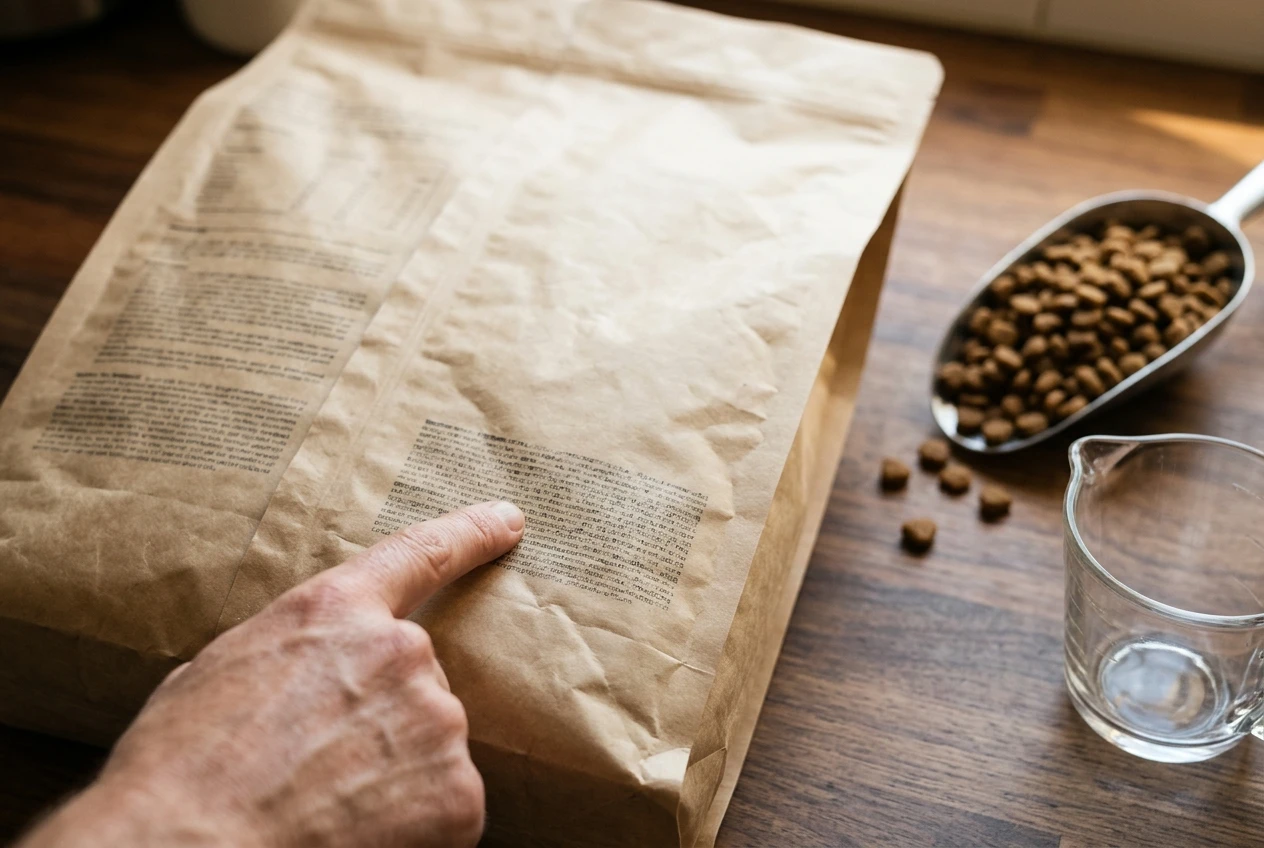
The adequacy statement is usually in small print near the ingredients. In the United States, look for wording that the food is “complete and balanced” for a stated life stage, such as growth, adult maintenance, or all life stages. Without it, the food may be a treat or a supplement and should not be the whole diet. Rules differ in other countries, so check what your local standard calls this statement.
The ingredient list is ordered by weight before cooking. Fresh meat contains a lot of water, so it can top the list yet contribute less protein than a dried meat meal further down. Look for a named protein source (chicken, lamb, salmon) rather than vague terms.
The guaranteed analysis gives minimum crude protein and fat and maximum fiber and moisture. Compare foods on a dry-matter basis when one is canned and one is dry, because moisture distorts the numbers.
The product name follows labeling rules. A name like “Beef Dog Food” must be mostly beef, while “Beef Dinner” or “with Beef” can contain much less, and “Beef Flavor” only needs enough to be detectable.
Which type of dog food suits your dog: kibble, fresh, raw, or home-cooked?
For most dogs on a budget, a complete and balanced kibble is the most practical base, and the other types work best as upgrades or add-ons you can actually afford. The right choice depends on your dog’s health, your budget, and how much preparation you can manage.
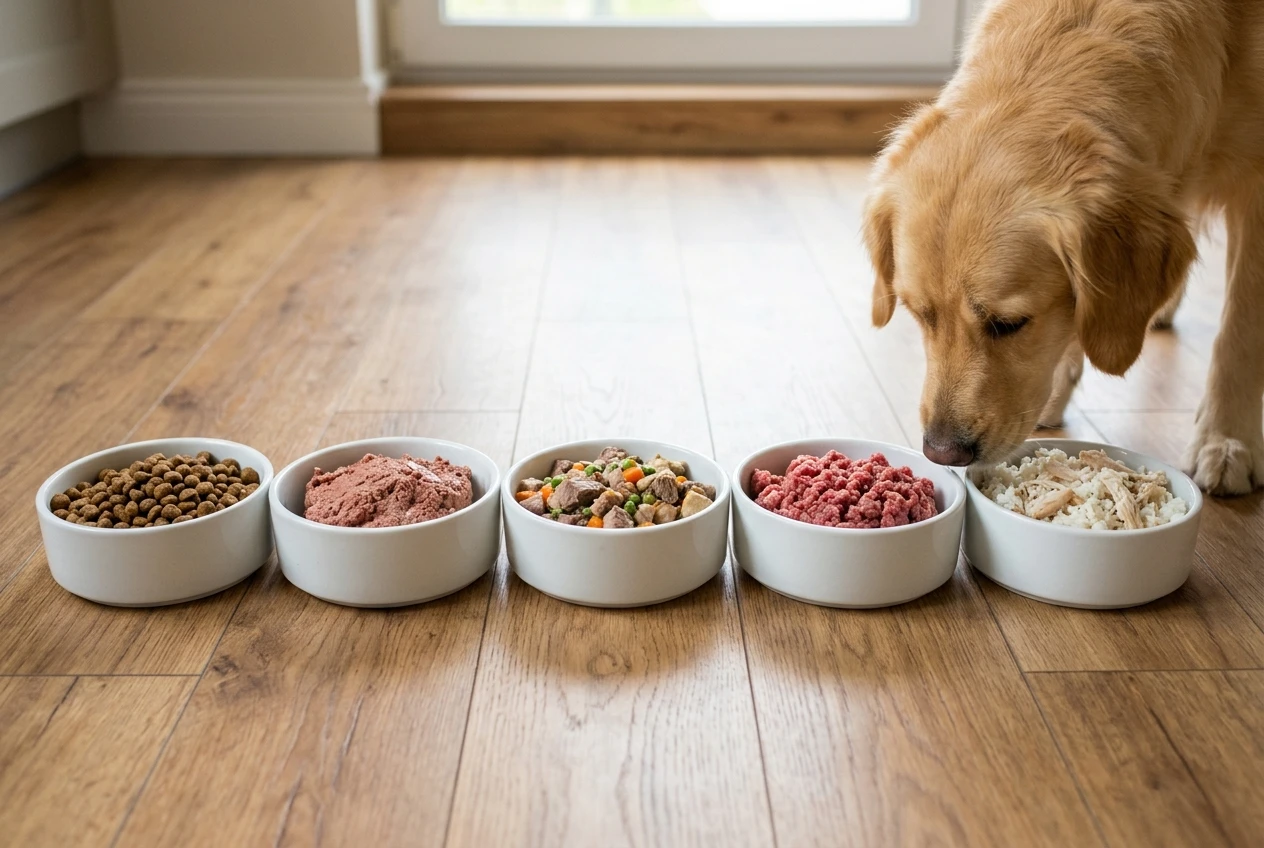
Food type | Strengths | Drawbacks |
|---|---|---|
Kibble | Usually the lowest cost per day, easy to store and portion, many complete options | Highly processed, quality varies widely between brands |
Canned or wet | Palatable, high moisture, useful for picky or older dogs | Costs more per calorie, opened cans need refrigeration |
Fresh (cooked, delivered or store-bought) | Appealing to many dogs, minimal processing | Typically the highest cost, needs fridge or freezer space |
Raw | Some owners prefer the ingredients | Bacterial contamination risk for dogs and people, hard to balance, usually costly |
Home-cooked | Full control over ingredients | Easy to end up unbalanced without a recipe from a veterinary nutritionist, takes time |
Raw and home-cooked diets deserve extra caution. Home-made recipes found online are often missing key nutrients such as calcium, and deficiencies can build up slowly. If you want to cook for your dog, ask your vet for a recipe from a board-certified veterinary nutritionist.
Mixing is a legitimate approach. A common budget version is a solid kibble topped with a spoonful of cooked or fresh food, as long as the total calories stay in range and the extras are safe for dogs.
How does your dog’s age, size, and health change what they need?
Life stage, size, and health each change what a dog needs, so the right food for a puppy is wrong for a senior, and the right food for a healthy adult may be wrong for a dog with kidney disease.
Puppies need food formulated for growth, with the right balance of calcium and calories. Large-breed puppies need a large-breed puppy formula, because growing too fast can stress their joints. An adult food, even a good one, does not meet those needs.
Adult dogs do well on adult maintenance or all-life-stages foods. Calorie needs vary with activity, so a working dog and a sofa dog of the same weight can need quite different amounts.
Senior dogs often need fewer calories and sometimes more attention to weight, joints, and teeth. Many stay healthy on a regular adult food, so a “senior” label is not automatically required. Let your vet’s assessment decide.
Size matters mainly for kibble shape and for puppies. Small dogs often prefer smaller pieces, and large breeds benefit from formulas designed for their growth.
Health conditions such as allergies, diabetes, pancreatitis, kidney disease, or urinary stones can require a prescription or therapeutic diet. These are medical decisions, covered below.
How can you feed a healthy diet without overspending?
Compare foods by cost per day instead of cost per bag, then trim waste and pick up savings that do not touch nutrition. Cost per day is the only number that reflects what you actually spend.
- Find the daily amount. The feeding guide on the bag gives a starting amount for your dog’s weight. Multiply it out to see how many days one bag lasts.
- Divide the bag price by those days. A cheaper bag with a larger daily portion can cost more than a pricier, denser food.
- Compare two or three foods that pass the label check. Pick the lowest daily cost among them.
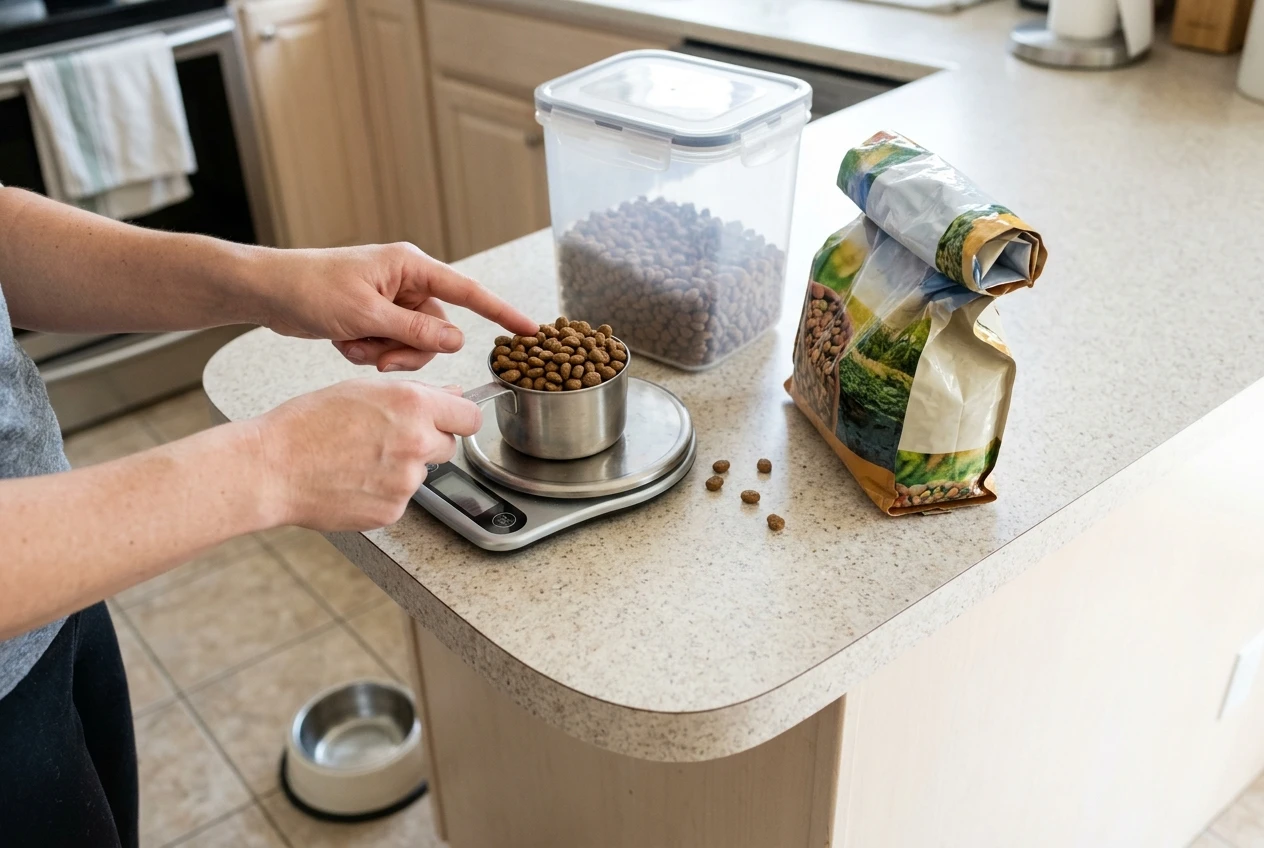
- Measure every meal. Use a measuring cup or a kitchen scale. Overfeeding wastes money and adds weight, which creates vet bills later.
- Buy the right bag size. Larger bags usually cost less per pound, but open kibble can go stale, so only buy what your dog finishes in a reasonable time and store it in a sealed container.
- Use treats sparingly. Treats are often an expensive way to add calories. Use part of your dog’s regular kibble as training rewards.
Other savings are worth checking: store loyalty programs, subscription discounts from retailers, and price comparisons across stores. Prices change, so check current ones rather than relying on memory.
Do not save money by switching to a food that lacks the adequacy statement, or by stretching meals with table scraps. A cheaper complete food is a better saving than an incomplete one.
Which common dog food claims should you ignore?
Ignore claims that describe the marketing instead of the nutrition: “human grade” implied as automatically better, “natural,” “holistic,” “premium,” and wolf-themed branding. None of them guarantees that the food is complete and balanced or well made.
- “Natural” and “holistic”: these words say little about nutritional quality. Check the adequacy statement and ingredients instead.
- “Grain-free”: grain is not harmful for most dogs. The FDA has investigated a possible link between some grain-free diets and a heart condition called dilated cardiomyopathy, so talk to your vet before choosing one unless a diagnosed allergy requires it.
- “No by-products”: the term covers a wide range of ingredients, and some are nutritious organ meats. The absence of the word does not make a food better.
- “Ancestral” or “wolf diet”: dogs have evolved alongside humans and digest starches better than wolves do. Their nutritional needs are not the same as a wolf’s.
- Long ingredient lists with exotic items: a list full of berries or superfoods adds little nutrition at the quantities used, but adds to the price.
- Brand popularity and reviews: a food popular with other owners may still not suit your dog. Dogs differ, and online reviews often reflect taste or coat appearance rather than nutritional adequacy.
A useful test for any claim: does it change what nutrients reach your dog? If not, it should not change what you pay.
When should you ask your vet before changing your dog’s food?
Ask your vet before changing food if your dog is a puppy, is pregnant or nursing, is a senior, or has any medical condition, because their needs are specific and a wrong choice can cause harm. A vet visit costs money, but a wrong diet for a sick dog costs more.
Contact your vet first in these situations:
- Your dog has a diagnosed condition such as kidney disease, diabetes, pancreatitis, heart disease, or urinary stones.
- Your dog has ongoing vomiting, diarrhea, itching, ear infections, or skin problems that might point to a food allergy.
- Your dog is losing or gaining weight without a clear reason.
- You want to feed raw or home-cooked food.
- Your dog is on medication that interacts with diet.
- You are considering a grain-free or exotic-protein diet.
Some foods are dangerous regardless of diet type, including grapes, raisins, onions, chocolate, and anything sweetened with xylitol. If your dog eats any of them, contact a vet or an animal poison hotline right away.
For routine questions, your vet can often weigh your dog, score their body condition, and tell you whether the current food and portion are working. That single check can save more than any coupon.
How do you switch your dog to a new food safely?
Switch gradually over about seven to ten days, mixing increasing amounts of the new food into the old, so your dog’s digestive system can adjust. Changing suddenly is a common cause of stomach upset.
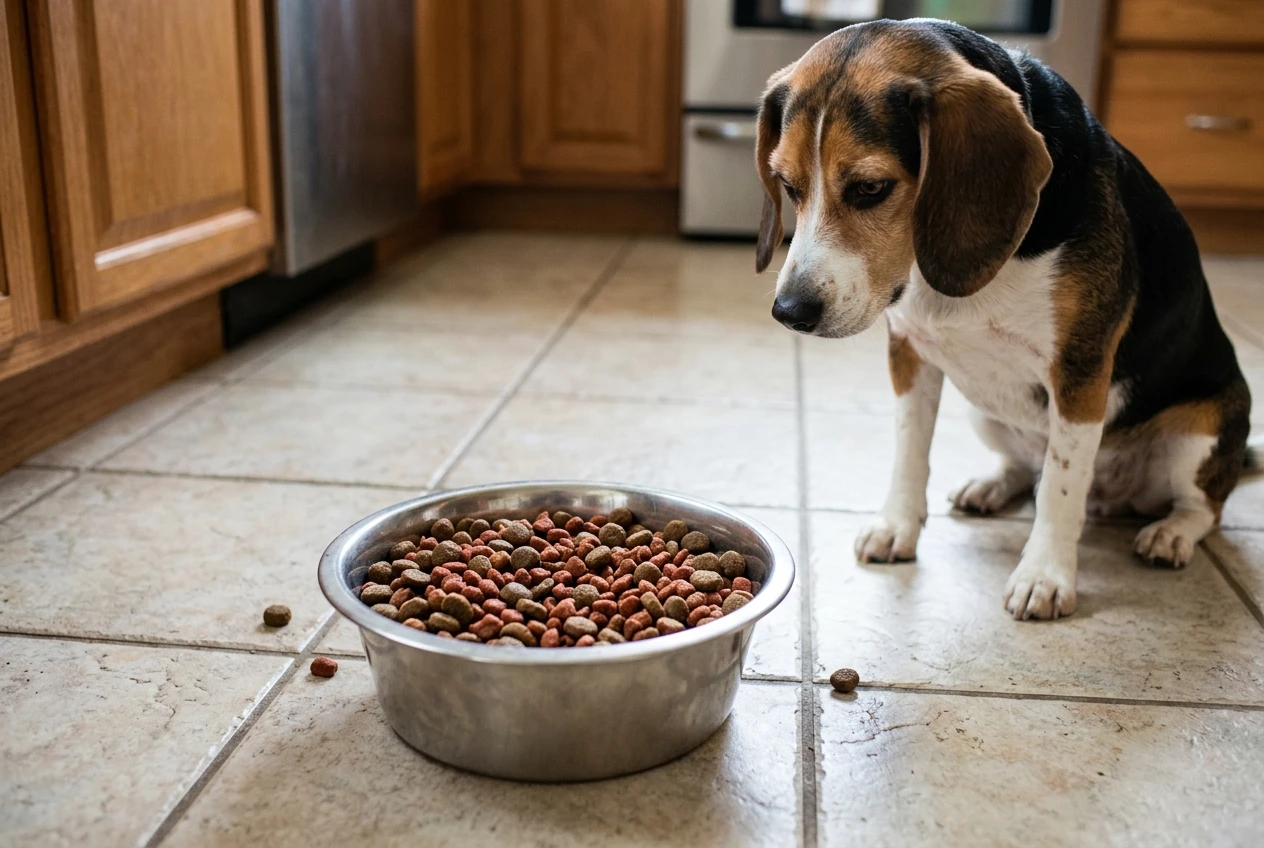
- Days 1 to 3: feed mostly the old food with a quarter of the new food mixed in.
- Days 4 to 6: feed half old and half new.
- Days 7 to 9: feed mostly new food with a quarter of the old.
- Day 10: feed the new food only.
Watch your dog’s stool, appetite, energy, and itching as you go. Slightly soft stool can happen during a change. If your dog vomits, has persistent diarrhea, or refuses to eat, slow down or return to the previous step, and call your vet if symptoms continue.
Some dogs need a slower transition, particularly those with sensitive stomachs. Give the new food a few weeks before judging it, and look at coat condition, energy, weight, and stool quality. If the food passes those checks at a daily cost you can sustain, you have found a healthy diet that fits your budget.