Pet grooming at home works best when you introduce each task in short, calm sessions. Start with brushing, then add bathing, nails, ears and teeth one at a time, and reward your pet after every small step. Stop when your pet shows stress, and leave matted coats or medical problems to a professional.
What does pet grooming at home actually involve?
Grooming at home covers five regular tasks: brushing, bathing, nail trimming, ear cleaning and tooth care. Each one keeps your pet comfortable, and each gives you a chance to check their body for lumps, scabs, fleas, sore spots or anything that looks different from last week.
Dogs and cats need these tasks in different amounts. Most dogs need regular brushing, a bath now and then, and nail trims. Most cats clean themselves well and need little more than brushing, nail trims and the occasional check of ears and teeth. Long-haired cats and dogs with thick or curly coats need more help than short-coated ones.
The part that makes or breaks pet grooming at home is how your animal feels about being handled. A pet who tolerates a brush but panics at the nail clippers is telling you which task needs slower, more gradual practice. Treat the handling as the skill you are building, and the tools as secondary.
How do you set up grooming so your pet learns to trust it?
Teach grooming the way you would teach any other new skill: in tiny steps, with a reward at the end of each one. Sessions of two to five minutes are plenty at the start, and ending one while your pet is still relaxed matters more than finishing the task.
Pick a calm time, such as after a walk for a dog or after a meal for a cat, when your pet is tired and not wound up. Choose a spot with good footing. A non-slip mat on a table or the floor helps both species feel steady.
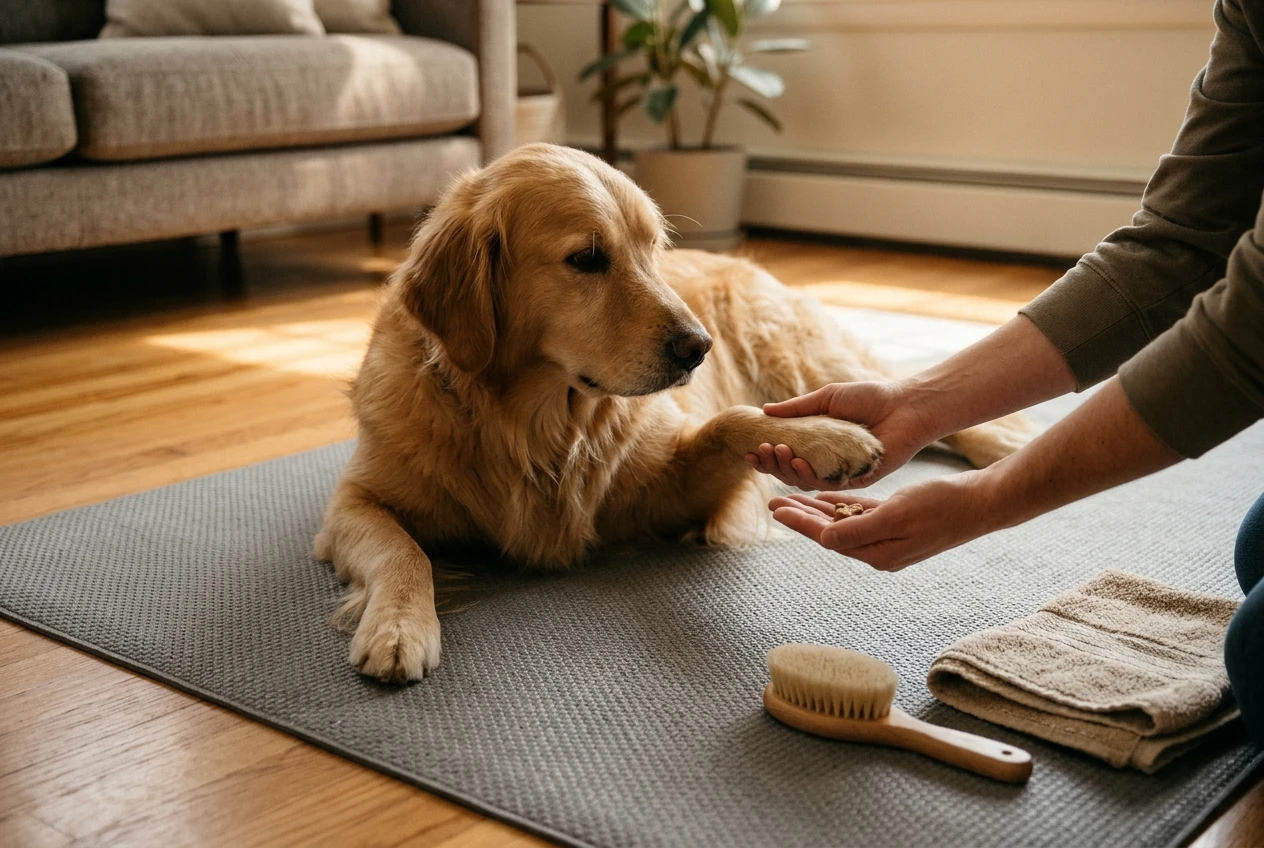
A good order for building trust runs from the least invasive task to the most:
- Touch and handling. Gently touch paws, ears, tail and mouth for a few seconds, then give a treat.
- Brushing. Most pets accept this first, and it gets them used to being held still.
- Tool introduction. Let your pet sniff the clippers, the towel and the toothbrush. Reward them for calm curiosity before you use anything.
- Nails, ears and teeth. Do one or two nails, or one side of the mouth, per session.
- Bathing. Leave this for last, because it combines water, handling, noise and restraint in one go.
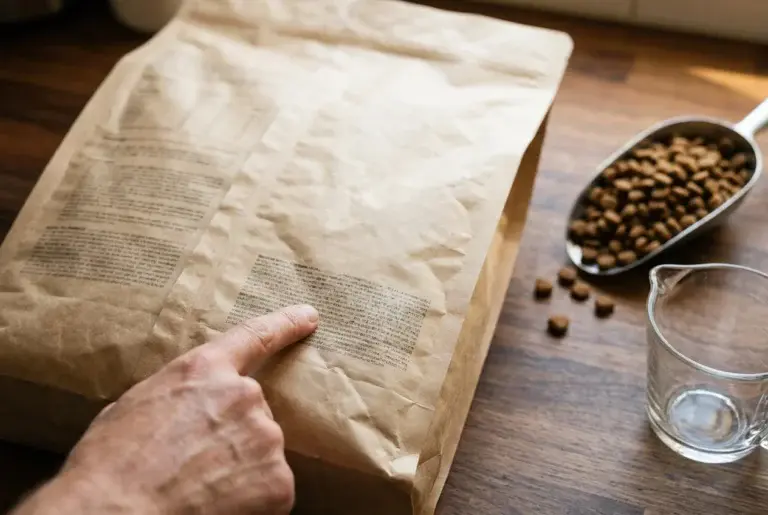
Use treats your pet loves and rarely gets, in pieces small enough to swallow quickly. Keep your voice low and even. If your pet backs off at any step, go back to the previous one for a few more sessions and move forward again when they seem relaxed.
What basic tools do you need to start grooming at home?
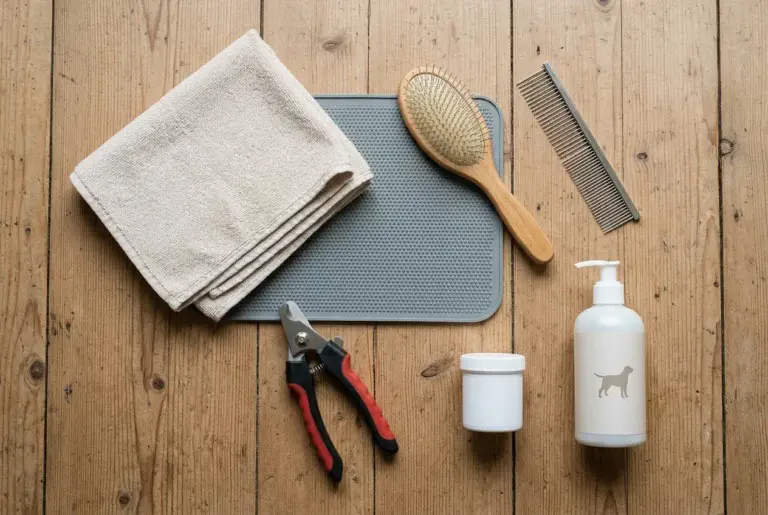
You need a brush suited to the coat, pet-specific shampoo, nail clippers or a grinder, a gentle ear cleaner, a pet toothbrush with pet toothpaste, towels and treats. Start with only the tools for the task you are about to teach, and buy the rest as you reach them.
- Brush or comb: A soft bristle brush suits short coats. A slicker brush and a metal comb suit longer or denser coats. A rubber grooming mitt is a gentle starting point for pets who dislike brushes.
- Shampoo: Choose one made for dogs or cats. Human shampoo is formulated for human skin and is not a good substitute.
- Nail tools: Scissor-style or guillotine clippers made for the size of your pet, or a small nail grinder. Keep styptic powder nearby in case you clip too short.
- Ear cleaner: A liquid cleaner made for pets. Your vet can recommend one.
- Dental kit: A pet toothbrush or finger brush and toothpaste made for pets. Human toothpaste is not safe for them to swallow.
- Towels and a mat: One towel to dry, one to put under your pet so they do not slip.
If you are bringing home a kitten, the list of what you really need is shorter than most shopping guides suggest, and our piece on essential gear for new kitten owners covers which items can wait.
How do you brush your pet’s coat properly?
Brush in the direction the hair grows, with light strokes, and work through the whole coat in small sections. Brushing is the easiest task to turn into a daily habit, and it removes loose hair and dirt before they turn into tangles.
Begin on the areas your pet likes, usually the back and shoulders. Move slowly toward the places most pets find sensitive: the belly, the legs, the tail and behind the ears. Mats tend to form in those spots, along with the armpits and the area around the collar or harness.
For tangles, hold the hair at the base, close to the skin, so the brush does not pull. Work the knot apart from the tips inward with a comb. If a mat is tight against the skin, stop. Cutting it out with scissors is how pets get accidentally nicked, because the skin often lifts into the mat. A groomer or vet can remove it safely.
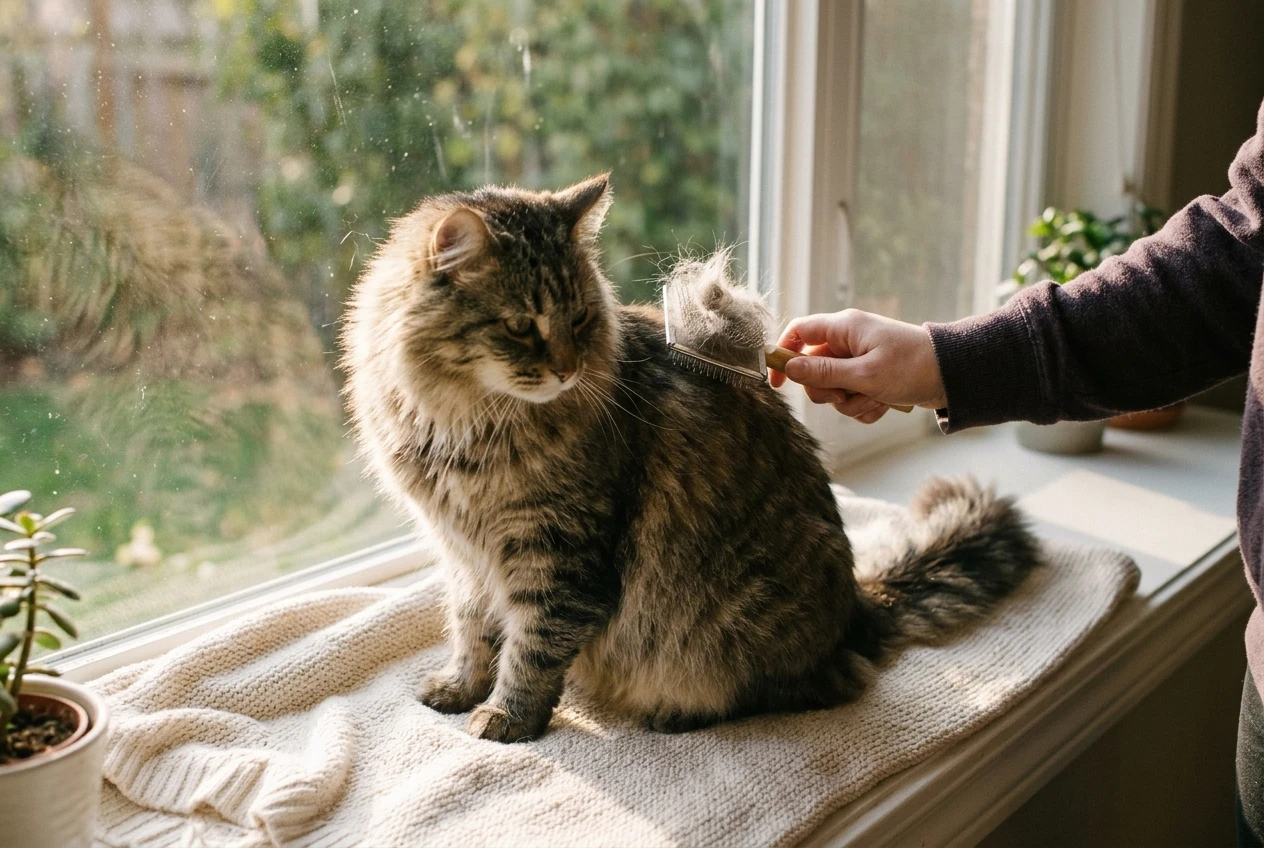
Short sessions help with cats especially. Brush a few strokes, offer a treat, and stop before the tail starts twitching. Long-haired cats usually need this daily, and a cat who is brushed from kittenhood tends to see it as ordinary.
How do you bathe a dog or cat at home without a battle?
Make the bath predictable and short: have everything within reach, use lukewarm water, and keep your pet’s footing secure. Most of the struggle in a bath comes from slipping, cold water and surprise, and you can remove all three before you start.
Cats rarely need a bath unless they have gotten into something sticky or toxic, or a vet has advised it. Many dogs need one only when they are dirty or smelly, and over-bathing can dry out the skin. If you are unsure, ask your vet how often suits your pet’s coat and skin.
A calm bath follows this sequence:
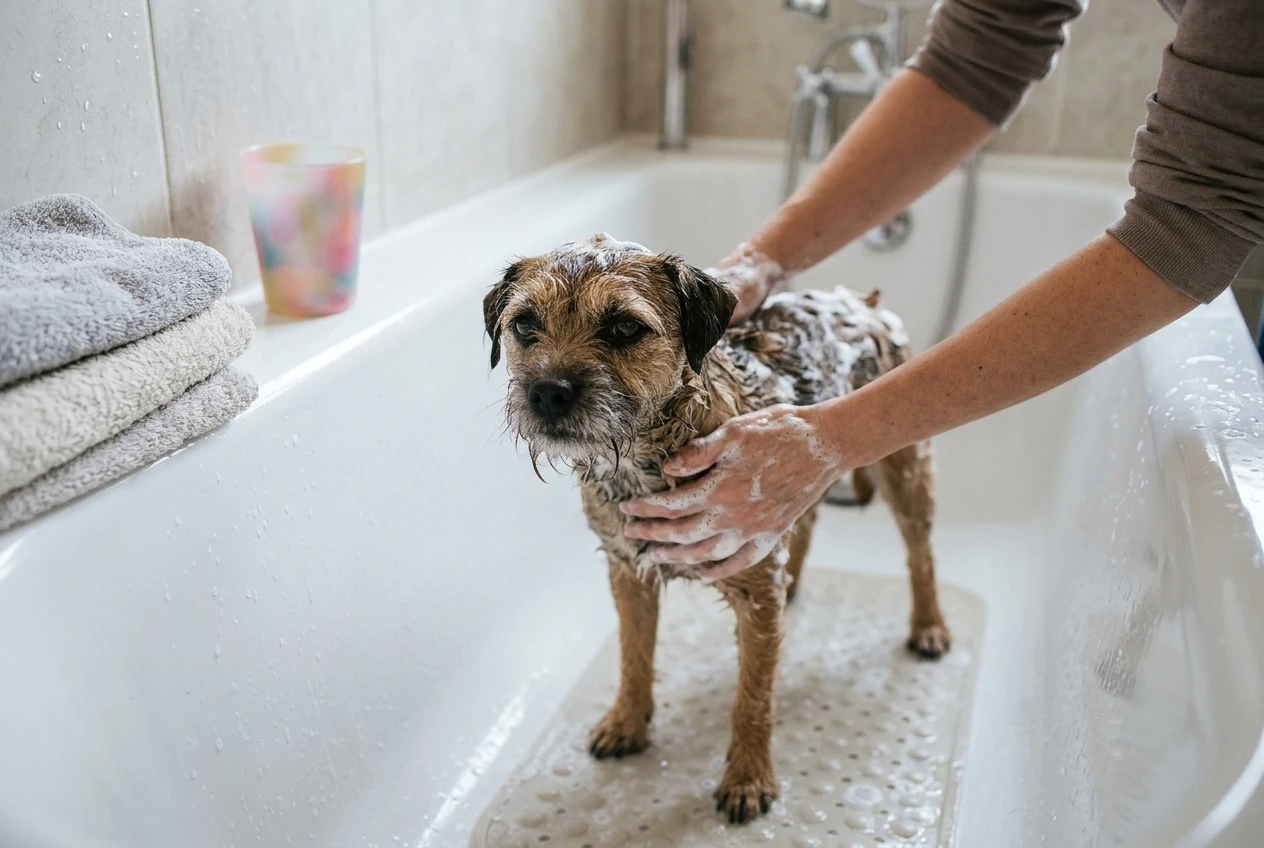
- Brush first. Wet mats tighten, so remove tangles before water touches the coat.
- Set up the space. Put a non-slip mat in the tub or sink, lay out towels, and open the shampoo before you bring your pet in.
- Wet the body gradually. Use a cup or a gentle spray, starting at the back legs and moving up. Keep water away from the face, ears and eyes.
- Lather and massage. Work shampoo in with your fingers, from the neck to the tail, and give a treat or lick mat if your pet will take one.
- Rinse thoroughly. Leftover shampoo can irritate the skin, so keep rinsing until the water runs clear.
- Dry well. Rub with a towel and keep your pet warm. Some dogs accept a blow dryer on a low, cool setting after gradual introduction. Many cats prefer towel drying in a warm room.
Wipe the face with a damp cloth rather than pouring water over it. If your pet is panicking and thrashing, end the bath, dry them off and try again another day with more preparation. A frightened pet who gets out of the water learns that staying calm is not necessary, but one who is forced through the whole bath learns that baths are frightening, and the second lesson is harder to undo.
How do you trim nails, clean ears and care for teeth safely?
Do each of these in tiny pieces: one paw or a few nails, one ear, one side of the mouth. All three involve sensitive areas, so your pet needs to trust your hands before you do the full job.
Nails
Hold the paw gently and press the pad so the nail extends. Clip only the tip, a little at a time. Inside each nail is the quick, a bundle of blood vessels and nerves. On light nails it shows as a pink area, and you can trim before it. On dark nails it is hard to see, so take off very small slices and stop when you see a dark dot in the center of the cut surface.
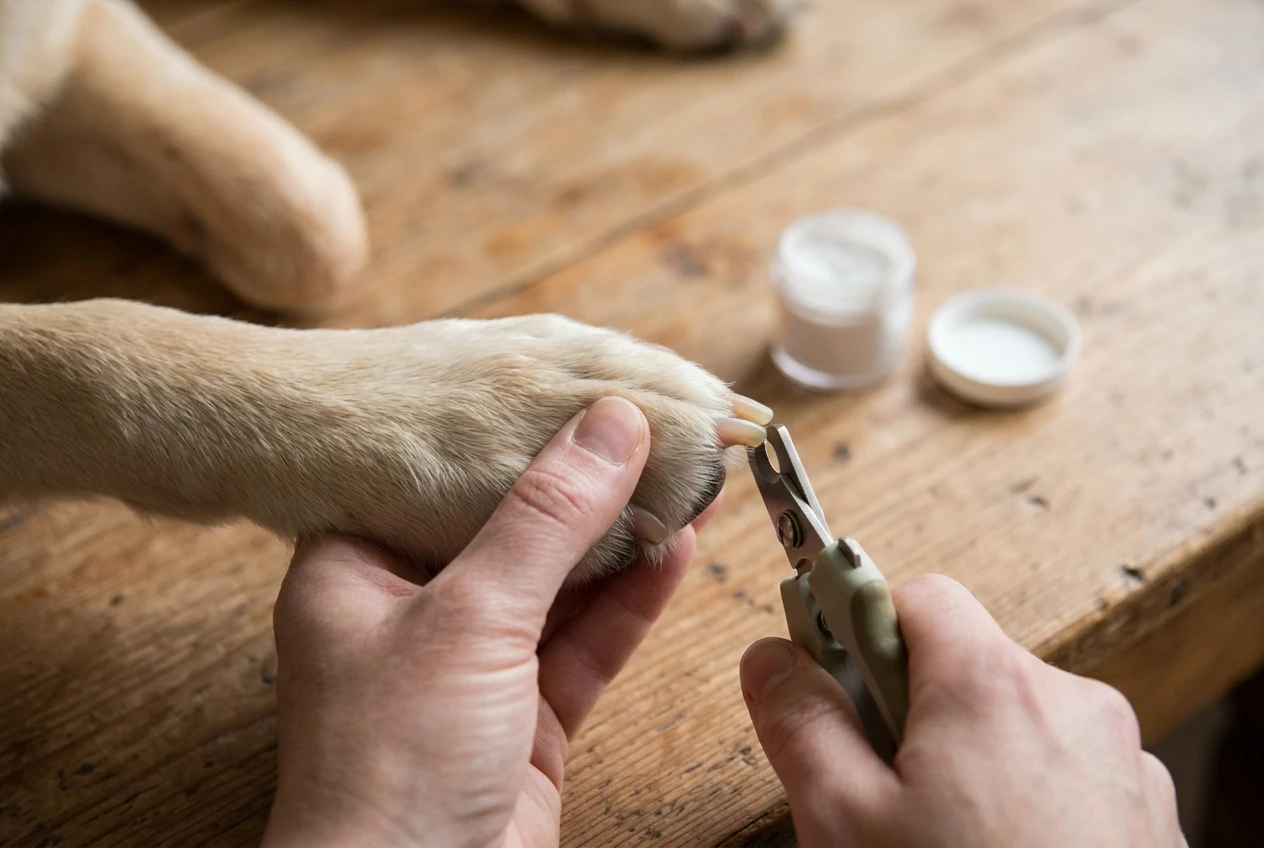
If you do cut the quick, press styptic powder onto the tip and stay calm. Your pet will pick up on your reaction. Cats’ nails curve and are usually clear, so it is often easier to see the quick. Many cats only need the tips taken off every few weeks.
Ears
Look first. Healthy ears are generally clean, pale pink inside and without a strong smell. Apply a pet ear cleaner as directed on the label, massage the base of the ear gently, let your pet shake, then wipe the visible part with cotton or gauze. Do not push cotton swabs into the ear canal.
Redness, swelling, a bad smell, dark or yellow discharge, or frequent head shaking and scratching are reasons to call your vet rather than keep cleaning.
Teeth
Let your pet taste the pet toothpaste from your finger first. Then rub the teeth and gums with a finger brush or soft toothbrush, concentrating on the outer surfaces where plaque collects. Start with a few teeth and build up over weeks.
Bad breath that is strong or sudden, red or bleeding gums, drooling, or reluctance to chew can point to dental disease. Those signs need a vet’s attention, not just more brushing.
How can you tell when your pet has had enough?
Your pet will usually show stress well before they bite, scratch or bolt, so the skill to learn is spotting the early signals and stopping when you see them. Pausing at the first sign keeps the session positive and protects you both.
Common signs in dogs include:
- Lip licking, yawning or panting when they are not hot
- Turning the head away or showing the whites of the eyes
- A tucked tail, lowered body or stiff posture
- Trembling, or shaking off when nothing is wet
- Freezing, pulling away, or refusing treats they normally like
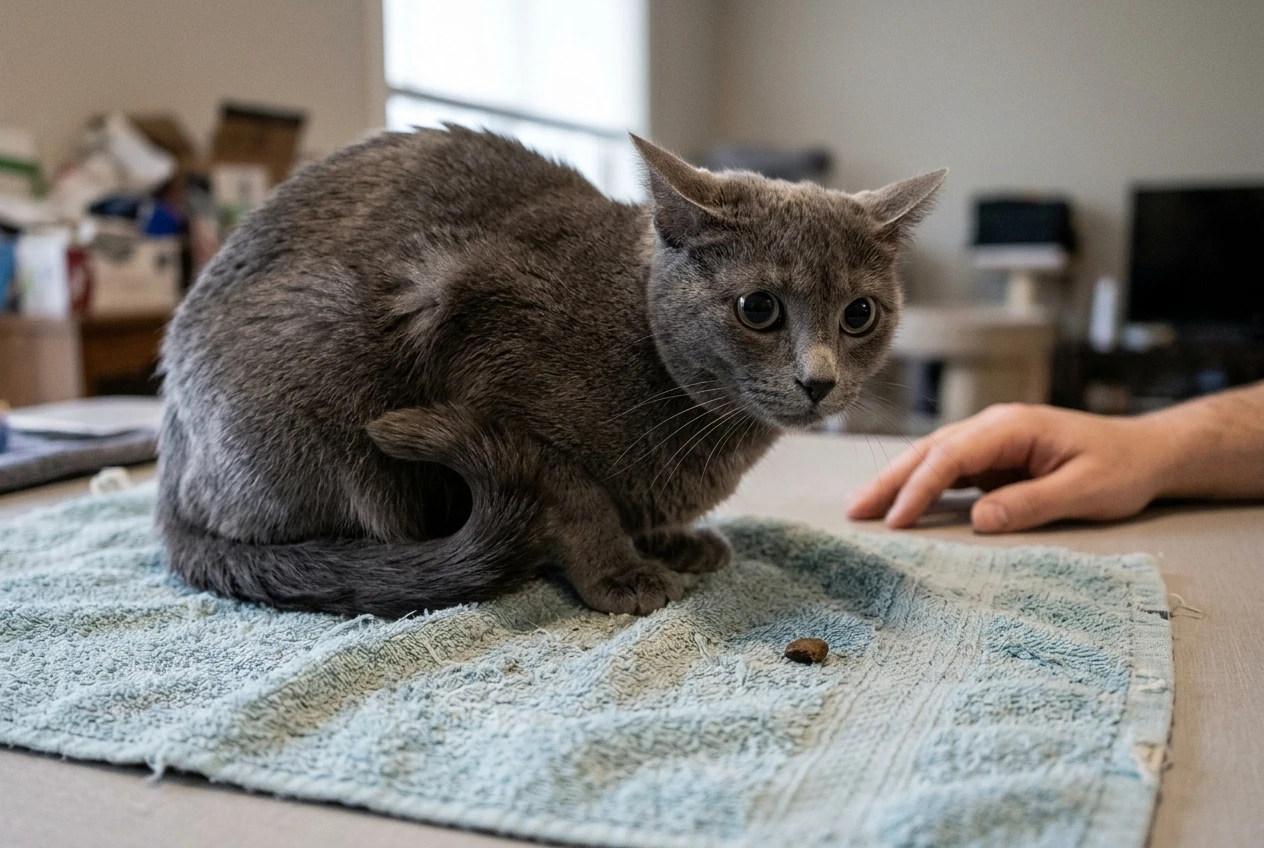
Common signs in cats include:
- Tail lashing or thumping
- Ears flattened or rotated back
- Skin rippling along the back
- Dilated pupils and a tense body
- Growling, hissing, or a swat with the claws in or out
Refusing a favorite treat is one of the clearest signs of all, because a relaxed pet will almost always take food. If you see one or more of these signals, stop what you are doing, let your pet go, and offer a reward once they are calm. Next time, shorten the session or go back to a gentler step.
Never punish a pet who growls or hisses. The growl is a warning, and a pet who is punished for warning may skip the warning next time.
When should you leave grooming to a professional?
Leave the job to a groomer or vet when it carries a risk of injury, when it needs sedation or special equipment, or when your pet’s reaction is too intense to work through safely at home. Home grooming is for maintenance, and some problems are past that.
Call in help for:
- Tight mats against the skin, especially in long-haired cats and dogs with dense coats.
- Skin problems, such as sores, hot spots, flaking, hair loss, lumps or signs of parasites.
- Ear or dental symptoms such as discharge, a strong smell, bleeding gums or pain.
- Aggression or extreme fear during handling. A vet can check for pain, and a trainer or behaviorist can help with the fear.
- Breed-specific cuts that require clippers and shaping skill.
- Elderly or injured pets who may be sore when held in certain positions.
Using a professional for some tasks does not undo your home routine. Many owners brush, wipe and check at home and book a groomer for full haircuts or for nails if their pet resists.
How often should you groom your pet at home?
How often depends mainly on coat type and species, and the table below gives general starting points. Your vet or groomer can adjust them for your pet’s breed, age and skin.
Task | Dogs | Cats |
|---|---|---|
Brushing | A few times a week for most coats; daily for long, thick or curly coats | Weekly for short coats; daily for long coats |
Bathing | Only when dirty or smelly, or as your vet advises | Rarely, only if needed or advised by a vet |
Nail trims | Every few weeks, or when you hear nails clicking on the floor | Every few weeks, taking only the tips |
Ear check | Weekly look; clean only when needed | Weekly look; clean only when needed |
Teeth | Daily is ideal; a few times a week still helps | Daily is ideal; a few times a week still helps |
Pick a rhythm you can keep. Five minutes of brushing during a TV show, with nail trims on a set weekend, will do more for your pet than a long monthly session that neither of you looks forward to. A regular routine also means you notice changes early, from a new lump to a chipped nail, because you handle your pet all the time.