The essential gear for new kitten owners comes down to a short list: kitten food, two shallow bowls, a litter box with litter, a hard-sided carrier, a scratching post, a few safe toys, and a quiet place to sleep. Everything else can wait until you see what your kitten actually uses.
What gear does a new kitten need on day one?
Day one needs only the items that cover eating, toileting, sleeping, safe transport and basic scratching. A kitten that has these has what it needs for the first 24 hours, and the shops will still be there tomorrow.
Buy these before the kitten arrives:
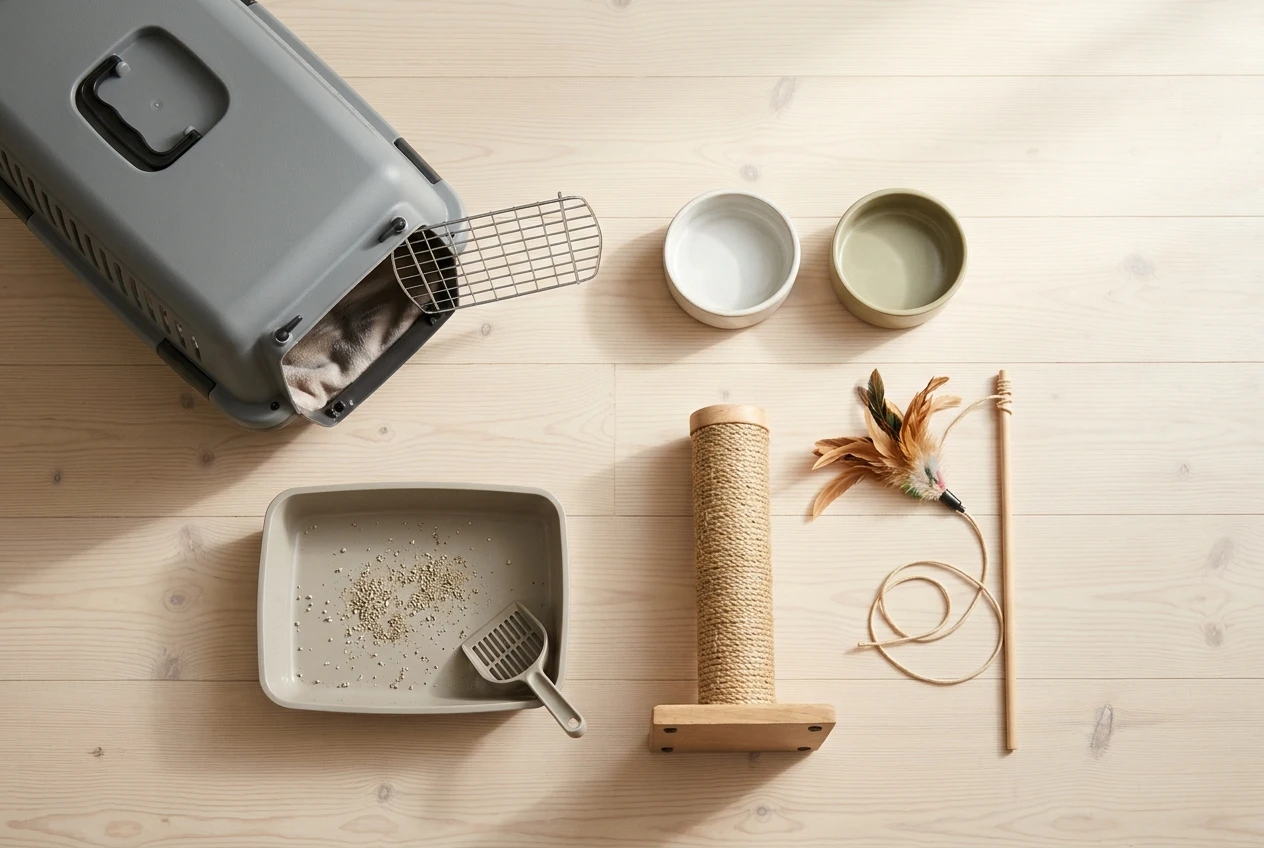
- Kitten food of the same type the kitten is already eating
- Two shallow bowls, one for food and one for water
- A litter box and litter
- A hard-sided carrier for the trip home and every trip after
- A bed or a lined box in a quiet spot
- A scratching post
- Two or three simple toys
The food matters most, because a sudden change can upset a kitten’s stomach. Ask the breeder, shelter or rescue what the kitten has been eating and buy that brand and flavor for the first week or two. You can switch gradually later, mixing the new food into the old over several days.
Before you shop, also walk through the home for hazards. Lilies are toxic to cats, loose cords invite chewing, and small gaps behind appliances are easy for a kitten to squeeze into. This costs nothing and protects the kitten better than most products.
Which feeding supplies make mealtimes easier?
Two shallow, wide bowls made of ceramic or stainless steel are all a kitten needs for feeding. Both materials are easy to wash and do not hold odors the way scratched plastic can.
Shallow matters because a kitten has a small face and tiny mouth. Deep bowls make it harder to reach food, and narrow bowls can press against the whiskers, which some cats dislike. Keep the water bowl away from the food bowl and away from the litter box, since many cats prefer drinking apart from where they eat.
Wet food and dry food both work for kittens, as long as the product is labeled as complete and balanced for growth. Your vet can tell you how much to offer and how many meals a day suit your kitten’s age. Follow that advice rather than the generic chart on a bag.
A few feeding extras are worth considering in the first month:
- A washable mat under the bowls, which keeps spilled food and splashed water off the floor
- A small airtight container for dry food, so it stays fresh
- A can cover if you open wet food and will use it again within the day
Automatic feeders, water fountains and puzzle feeders can all be useful later. None is needed while you are learning your kitten’s routine.
What litter setup works best for a kitten?
A low-sided, uncovered box with a plain unscented litter is the simplest setup for a kitten. A young kitten has to climb in and out, and a tall wall can be enough to make it skip the box.
Choose a box that is easy to step into and large enough to turn around in. You may later move up to a bigger box as the kitten grows, so you do not need to buy the largest size today. A cheap plastic tray does the job.
Litter takes a little more thought. Many kittens do well with an unscented, fine-grained litter because it feels natural under their paws, and strong perfumes can put some cats off. Very young kittens sometimes taste litter, and clumping types are a concern if swallowed, so ask your vet or the place you are adopting from which kind suits your kitten’s age.
Use the same litter the kitten has been using for the first few weeks. Place the box somewhere quiet and easy to reach, away from the food and water, and show the kitten where it is as soon as it comes home. Plan on a scoop, a bag supply for waste, and a regular schedule for scooping.
Covered boxes, self-cleaning boxes and litter mats are conveniences. Put them in the later category until you know how your kitten behaves.
Where should a kitten sleep, hide and feel safe?
A kitten should have one small, quiet room to start in, with a bed, a hiding spot, food, water and the litter box all within reach. A single room lets the kitten learn where everything is before facing the whole house.
A bathroom or spare bedroom works well if it is warm and has no gaps behind furniture where the kitten could get stuck. Put the bed in a corner rather than the middle of the floor, because kittens settle more easily when they have a wall behind them.
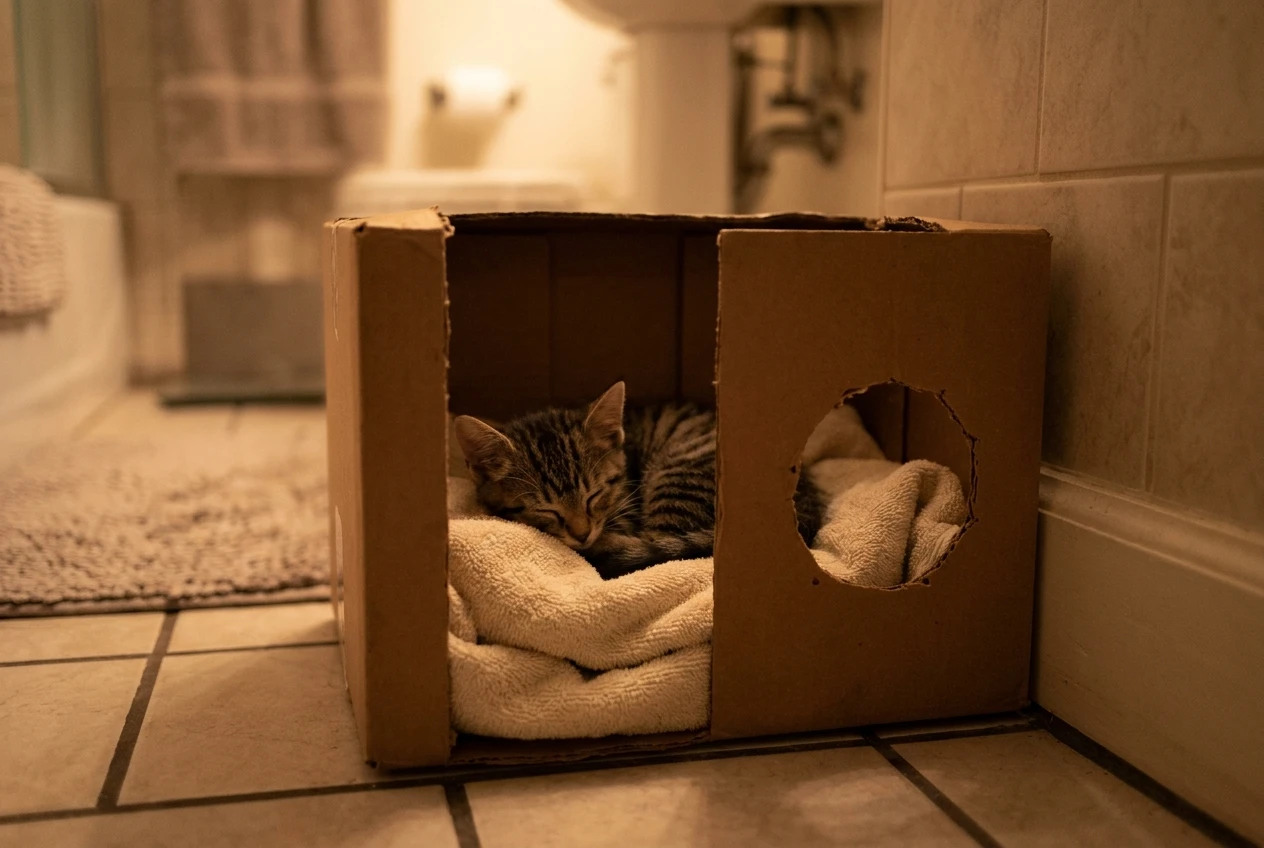
Your sleeping and hiding options can be inexpensive:
- A cardboard box with a hole cut in the side, lined with a soft towel
- A soft bed with low sides, washable at home
- A blanket or T-shirt that smells like you, which many kittens find comforting
- A covered hiding place, such as a box turned on its side
You do not need a cat tree on day one. A hiding place matters more than height at the beginning, and a nervous kitten uses it a lot. Once the kitten is confident and exploring the house, a sturdy tree or a shelf near a window gives it somewhere to climb and watch.
Skip heated beds and elaborate cat caves until you know the kitten’s habits. A clean towel works just as well while it is small.
Which scratching and play items save your furniture and your sanity?
A sturdy scratching post and a handful of toys that you control do more for your furniture than any spray or deterrent. Kittens scratch to stretch, mark territory and wear down claws, so they need an approved place to do it.
Pick a post that does not wobble, because a kitten that tips one over once may avoid it afterward. It should be tall enough for the kitten to stretch out fully along it. Sisal rope or sisal fabric is a common covering that suits most cats. Put the post next to the place where the kitten sleeps or near the furniture it has started to scratch, since cats often scratch after waking.
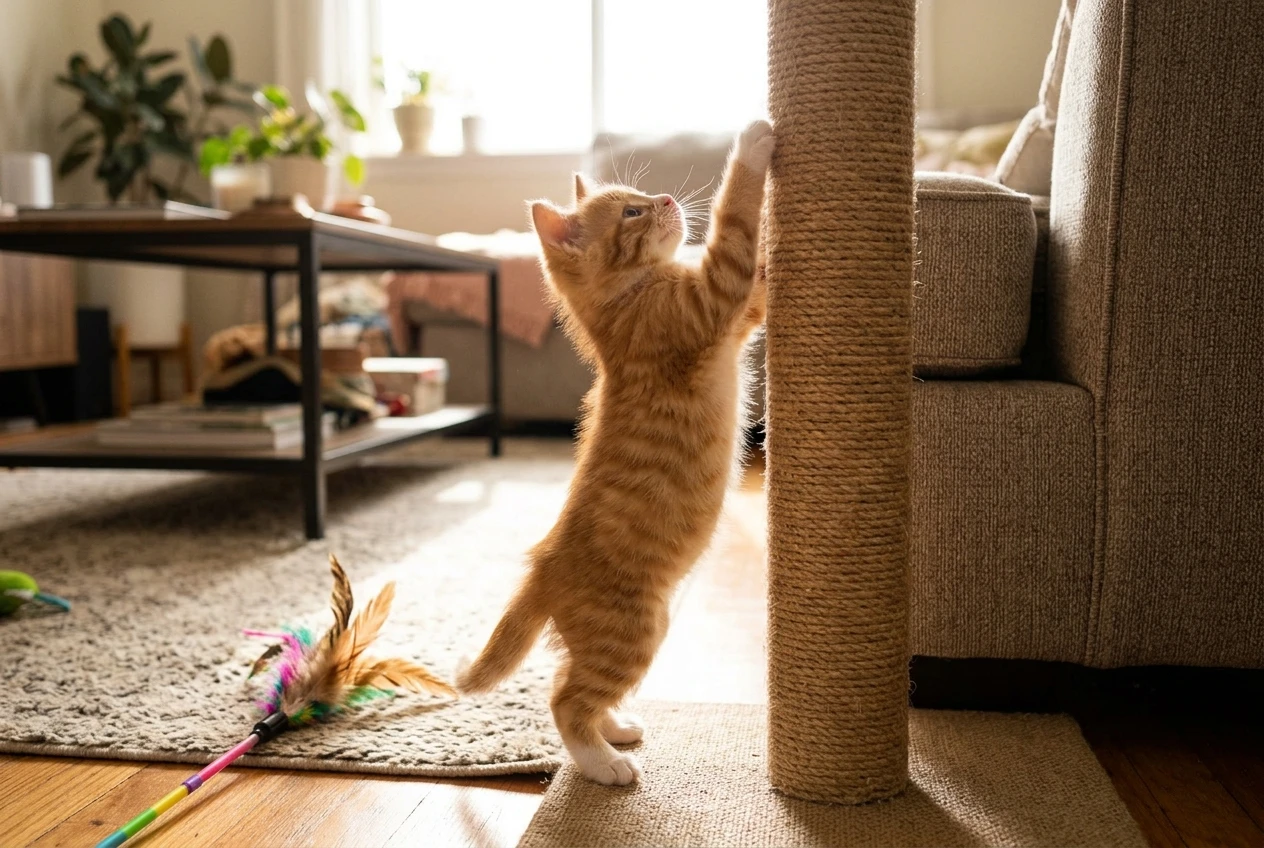
For play, simple works best:
- A wand toy with a feather or fabric end, which lets you play with the kitten at a safe distance from your hands
- Small balls that roll and are too large to swallow
- Crinkle toys or soft mice for solo play
- A cardboard box or paper bag (with handles removed) for hiding and pouncing
Keep wand toys put away when you are not playing. String, yarn, ribbon and hair ties can be swallowed and cause serious problems, so a kitten should not have unsupervised access to them.
Short play sessions a few times a day help a kitten use up energy, and they are the best protection for your hands, ankles and curtains. Let the kitten win now and then by catching the toy at the end of a session.
What do you need for grooming, carrying and vet visits?
A secure hard-sided carrier is the most important item here, and a soft brush and nail clippers cover grooming for most kittens. The carrier will be used for the ride home and for every vet visit afterward, so it is worth choosing well.
Look for a carrier with a top opening or a door that detaches, because lifting a kitten out from above is easier than pulling it out from the front. Line it with a towel and keep it in the living space with the door open, so the kitten treats it as a normal resting place rather than something that appears only before vet trips. If you are driving, the carrier should be secured so it cannot slide or tip. The site’s guide to keeping pets safe in the car covers car safety for animals more broadly.
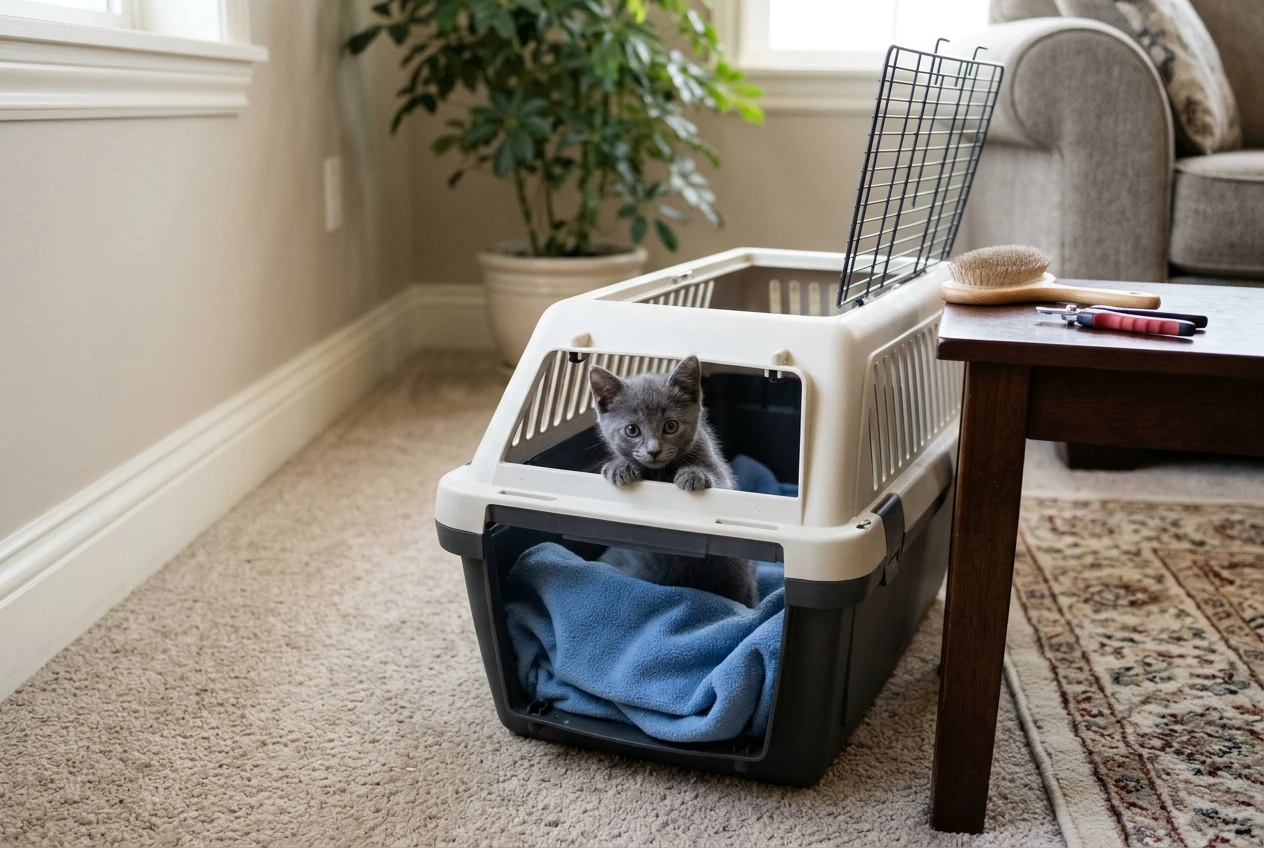
For grooming, you need very little:
- A soft brush or comb, with the type depending on coat length
- Cat nail clippers, to trim the sharp tips once your vet or groomer has shown you how
- Cat-safe wipes or a soft cloth for small messes
Short-haired kittens need only occasional brushing, while long-haired kittens benefit from starting a gentle daily routine early. Handle the paws and ears a little each day so the kitten gets used to being touched.
Before the first vet visit, gather whatever paperwork you received from the breeder, shelter or rescue, such as vaccination and deworming records. Write down your questions about food, litter, vaccines, spaying or neutering, and microchipping so you do not forget them in the exam room.
A breakaway collar with identification is optional at first, especially if the kitten stays indoors and gets microchipped. If you use a collar, it should be a breakaway style so it releases if it snags.
Which kitten products can you safely skip or buy later?
Most of the gear that ends up unused is bought before the owner knows the kitten’s habits. Waiting a few weeks tells you what the kitten likes, how it behaves and what your home actually needs.
Item | Verdict | Reason |
|---|---|---|
Large cat tree | Buy later | A hiding spot matters more at first, and you can choose the size once you know where it will sit |
Self-cleaning litter box | Buy later | A basic box lets you see how the kitten uses it and tells you if anything is wrong |
Water fountain | Buy later | A shallow bowl works, and some cats ignore fountains |
Automatic feeder | Buy later | Hand feeding in the early weeks helps you track appetite and bonding |
Clothing and costumes | Skip | Most kittens dislike them, and they can restrict movement |
Scented litter and air fresheners | Skip | Strong scents can put a kitten off the box |
Large pile of toys | Skip | A few toys, rotated, keep a kitten interested longer than a crowded basket |
Harness and leash | Later, if wanted | Only useful if you plan to train the kitten for outdoor walks |
Cat treats in bulk | Skip | A kitten’s favorites are not clear yet, and treats should be a small part of the diet |
Anything that touches the kitten’s health, such as supplements, flea products and dewormers, should come from your vet rather than from a shopping list. Products made for dogs or adult cats can be unsafe for kittens, so check before you buy.
A useful rule is to wait until a problem shows up. If the kitten scratches the sofa, add a second post. If it chews cords, look into cord covers. If it wakes you at night, think about more play before bed. You buy the product when you know what it needs to solve.
Can you take the kitten gear list with you? A printable checklist by priority
Yes. Copy the list below into your phone or print it, and tick items off as you buy them. It is sorted by when you need each one.
Day one (buy before the kitten arrives)
- Kitten food, matching what the kitten currently eats
- Two shallow bowls, ceramic or stainless steel
- Litter box with low sides
- Unscented litter, matching the current type
- Litter scoop and waste bags
- Hard-sided carrier with a top opening
- Bed or lined cardboard box
- Towel or blanket that smells familiar
- Sturdy scratching post
- Wand toy, small ball and a soft toy
- Home check for toxic plants, loose cords and small gaps
First month (add as you learn the kitten’s habits)
- Feeding mat and airtight food container
- Soft brush or comb
- Cat nail clippers
- Hiding box or covered bed
- Second scratching surface, if needed
- Breakaway collar with identification, if you choose to use one
- List of questions and records for the first vet visit
Nice to have (wait and see)
- Cat tree or window perch
- Water fountain
- Automatic feeder
- Self-cleaning or covered litter box
- Harness and leash
- Extra toys, rotated in over time
Start with the first list, bring the kitten home, and watch for a week or two. What the kitten reaches for, avoids and chews will tell you more about what to buy next than any store display.