How to Manage Pet Allergies at Home When Your Dog or Cat Won’t Stop Itching
Managing pet allergies at home means working out the likely trigger (fleas, the environment or food), changing one thing at a time, and recording what happens. Home measures can ease itching while you gather evidence, but only a vet can diagnose an allergy. Call early for broken skin, ear trouble or ongoing vomiting and diarrhea.
What are the signs your pet might have an allergy?
The most common sign is itching that keeps coming back: scratching, licking, chewing at the paws, rubbing the face on the carpet, or a cat grooming until the fur thins. Skin and ear problems are the usual pattern, and in some pets the first sign is digestive.
Watch for these:
- Scratching or chewing that continues for weeks, or returns on a cycle
- Red, inflamed or darkened skin, often on the belly, armpits, groin, paws or around the eyes and muzzle
- Licking or chewing the feet until the fur turns reddish-brown
- Repeated ear problems: head shaking, odor, dark discharge, redness inside the ear
- Small scabs or crusts, especially around a cat’s neck and head
- Bald or thinning patches where a cat has been over-grooming
- Soft stools, diarrhea, gas or occasional vomiting that has no other obvious cause
Many things cause itching besides allergies, including mites, skin infections, dry skin and pain, so treat this list as a reason to look closer. A pet who itches a little after a walk is different from one who cannot settle at night. Persistence and pattern are what matter.
Is it fleas, the environment or food? How to tell the likely culprits apart
Fleas, environmental allergens and food are the three usual suspects, and each leaves slightly different clues. None of the clues is conclusive on its own, but together they tell you where to start looking.
Likely cause | Typical clues | What it points to at home |
|---|---|---|
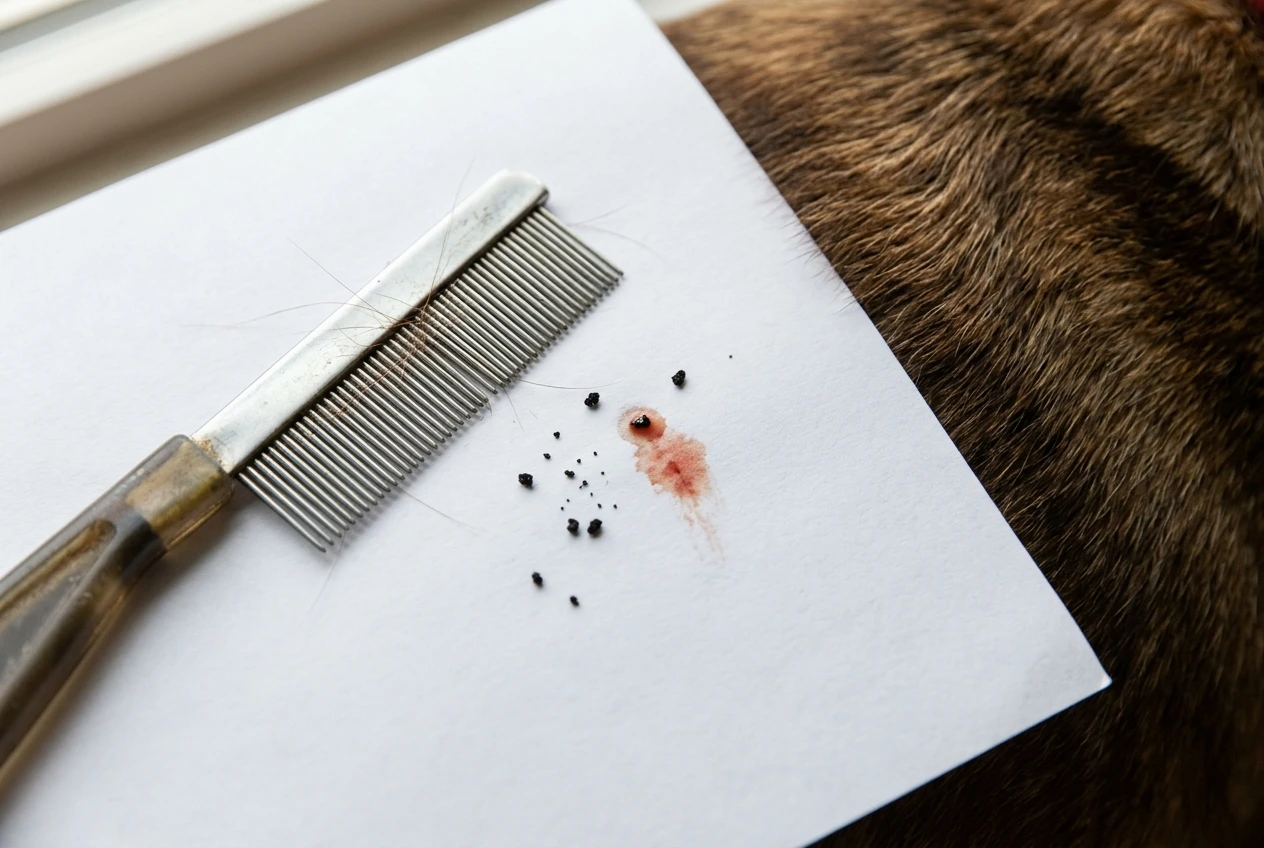
Fleas | Itching concentrated near the base of the tail and rump, flea dirt (tiny black specks that turn reddish when dampened on white paper), a pet that reacts badly to even a few bites | Check the coat with a flea comb and treat every pet in the household |
Environment (pollen, dust mites, mold) | Itching that is seasonal or worse after walks, or worse in certain rooms, with paws, face and ears often involved | Cleaning routines, wiping paws, washing bedding |
Food | Itching all year round, often with ear problems and soft stools or vomiting | A carefully run food trial with your vet |
A few details sharpen the picture. Some pets are allergic to flea saliva, so one bite can set off intense itching even when you find no fleas. That is why an indoor pet with no visible fleas can still have a flea problem, and why vets often recommend a flea preventive early in the process.
Season is the clearest clue for environmental allergies. If the itching flares in spring or autumn and eases in winter, pollen is a reasonable suspect. If it never eases, dust mites, mold or food move up the list.
Food allergies tend not to follow the calendar. Digestive upset alongside itchy skin and recurring ear problems is a combination worth mentioning to your vet. Keep in mind that a pet can have more than one allergy at the same time, which is the main reason this is slow detective work.
Use flea products made for your pet’s species. Some dog flea treatments contain ingredients that are dangerous to cats, so never apply a dog product to a cat, and check the label and your vet’s advice before treating a household with both.
How do you keep your home lower in allergens without turning it upside down?
Focus on the places your pet spends the most time, and make small, repeatable changes there rather than overhauling the house. Bedding, floors and the pet’s resting spots hold most of what your pet comes into contact with.
Start with these:
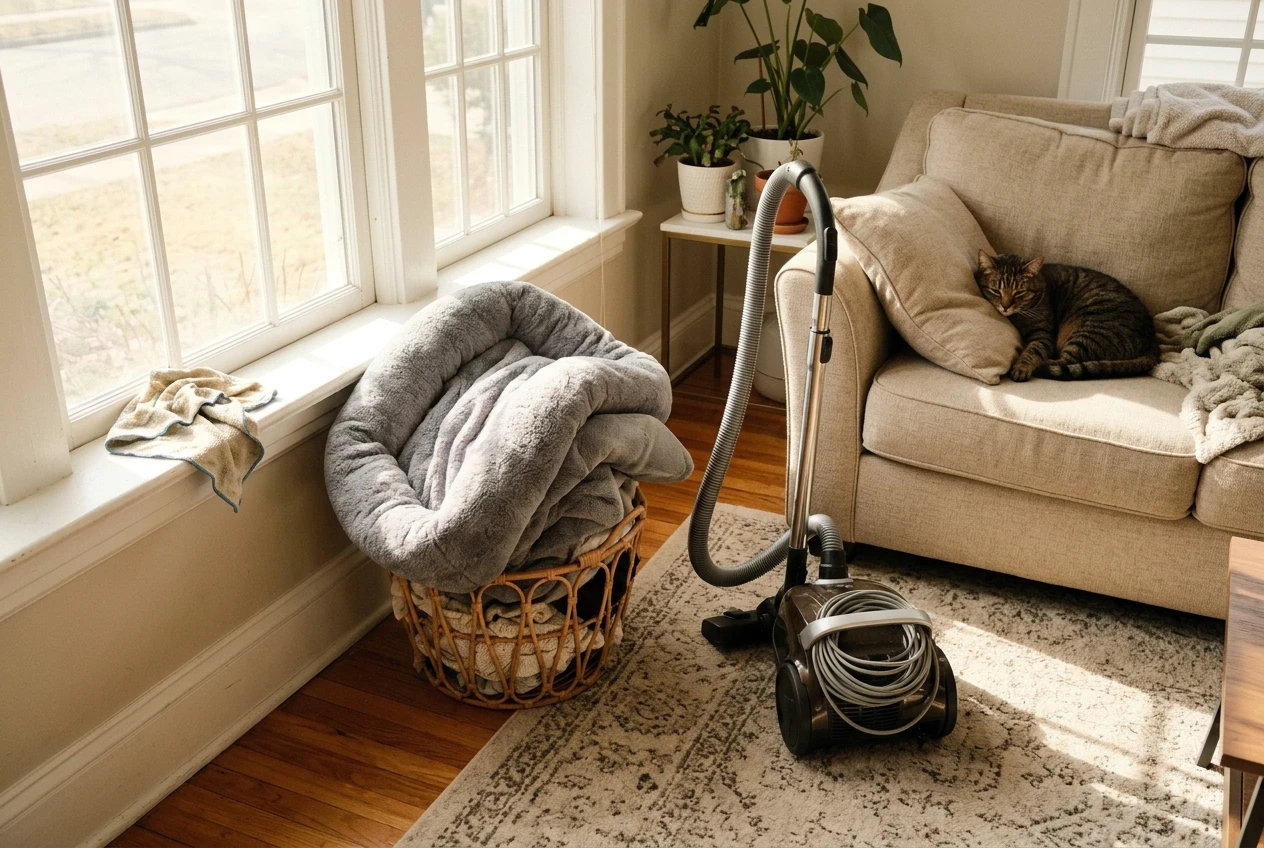
- Wash pet bedding weekly. Follow the care label, and use the hottest water the fabric allows. Wash throws and blankets your pet lies on as well.
- Vacuum often, paying attention to carpets, upholstery and the corners where hair and dust collect. A vacuum with a sealed system or HEPA filter keeps fine dust from blowing back into the room.
- Damp-dust surfaces instead of dry-wiping, which tends to move dust around.
- Wipe your pet’s paws and coat with a damp cloth after outdoor time, especially in pollen season.
- Keep indoor humidity moderate and fix damp patches, since mold and dust mites both do better in humid rooms.
- Treat for fleas year-round if your vet recommends it. Immature fleas live in carpets and bedding, so treating the pet alone may not clear them from the house.
Do not change all of this in the same week. If you wash bedding, buy an air purifier, switch cleaning products and change the food together, you will never know which change helped, or which one made things worse. Pick one measure, give it a couple of weeks, and note the result in your diary (more on that below).
Be careful with strongly scented sprays, plug-ins and harsh cleaning products. They are not proven to cause your pet’s itching, but they add variables you do not need when you are trying to isolate a cause. Unscented, pet-safe products keep the picture simpler.
Can bathing and grooming help an itchy pet?
Bathing can give short-term relief and reduces the allergens and debris sitting on the coat, but it does not treat the cause. Used sensibly, it is one of the more useful home tools.
For dogs, use a shampoo made for dogs, not a human one, because skin pH differs between species. Ask your vet whether a medicated or soothing shampoo is appropriate; some are designed for skin infections or irritated skin and come with specific instructions for contact time. Rinse thoroughly, since leftover shampoo can itself irritate the skin, and dry the skin folds and between the toes.
How often to bathe depends on the pet and on the product. Frequent bathing can dry some skin out, so follow the label and your vet’s guidance rather than guessing.
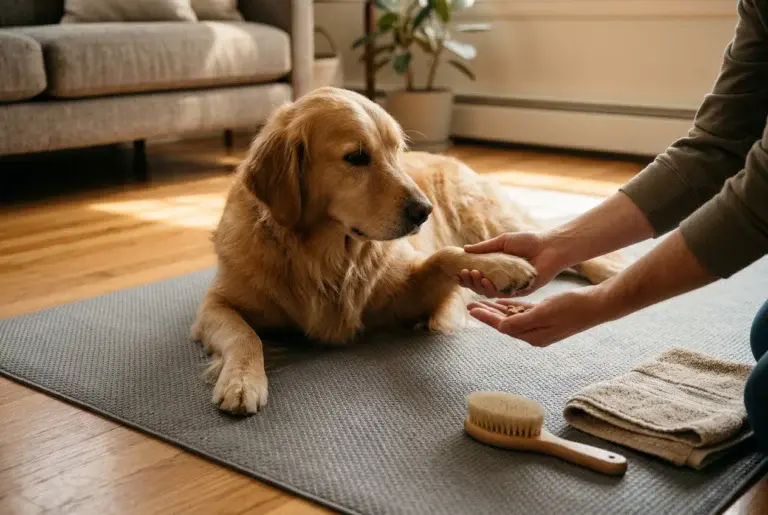
Cats are another matter. Many cats find baths distressing, and a stressed, scratching cat can injure you both. Wiping the coat with a damp cloth removes pollen and dander without a full bath, and regular brushing helps too. If your vet recommends bathing a cat, ask for a demonstration or plan it carefully.
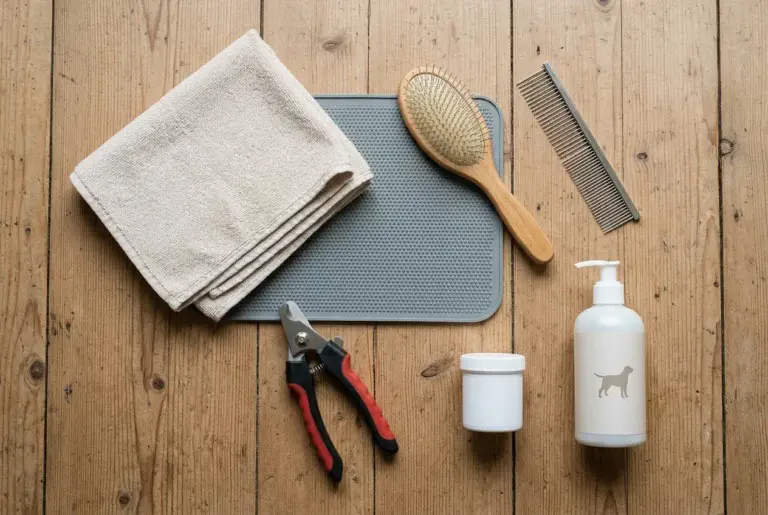
Brushing helps in both species: it removes loose hair and dander and lets you check the skin for redness, scabs or fleas. A flea comb run through the coat while you check is useful during any itching episode. If you need practical help with technique or keeping your pet calm, the guide to pet grooming at home covers that in detail.
Check the skin as you groom, and note anything new. A patch that is hot, weeping or smelly needs a vet, not another bath.
How do you run a food trial at home without muddying the results?
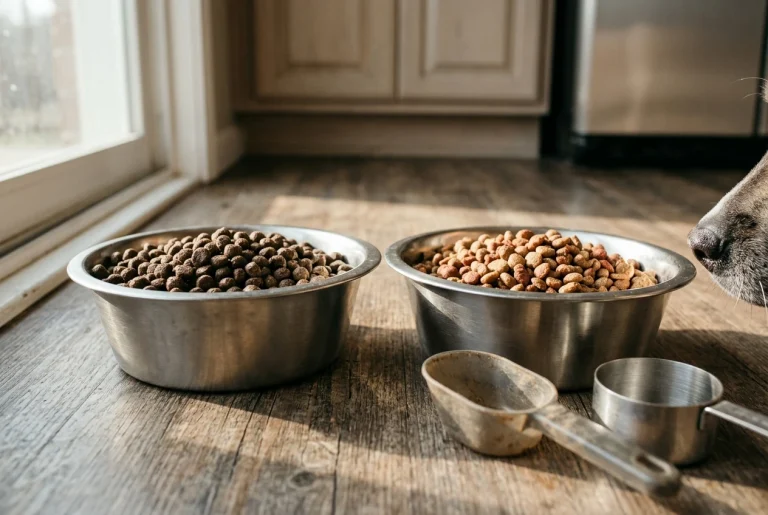
A food trial means feeding one carefully chosen diet, and nothing else, for long enough to see whether the symptoms change. Plan it with your vet, who can recommend a suitable diet and tell you how long to run it. Trials commonly last several weeks, often eight to twelve, because skin takes time to settle.
The method is simple. The discipline is the hard part.

- Talk to your vet first. They will recommend a diet, usually one with a protein your pet has not eaten before or a prescription diet with specially processed protein, and rule out other causes.
- Switch gradually, mixing the new food in over several days unless your vet says otherwise. Sudden changes can upset digestion by themselves and confuse the results.
- Feed only the trial diet. That includes treats, chews, table scraps, flavored dental products and anything a child might drop on the floor.
- Check everything that goes in the mouth. Many flavored medications, supplements and toothpastes contain animal proteins. Ask your vet about each one.
- Keep other pets’ food out of reach, including bowls left on the floor and cat food on a counter your dog can reach.
- Make sure everyone in the household knows the rules. One slip from a neighbor, relative or visitor can restart the clock.
- Record the results in your diary through the whole trial.
- Ask your vet about the next step when the trial ends. Usually the old ingredients are reintroduced one at a time, to see whether symptoms return.
Cats need extra care. A cat that stops eating for a day or more can become seriously ill, so if your cat refuses the new food, call your vet rather than waiting it out.
Be realistic about what the trial can tell you. If the symptoms improve, food may be involved. If they do not, food may not be the cause, or something else is running alongside it. Either result is useful, and neither one is a cure. A good trial ends with a clearer question for your vet.
A budget-friendly dog diet is not the same thing as a trial diet. During a trial, follow your vet’s recommended food, even if it costs more, until the trial is over.
What should you track in an allergy diary?
An allergy diary turns vague impressions (“he seems worse lately”) into a record your vet can use. Keep it simple enough that you will actually fill it in every day, even if only for a minute.
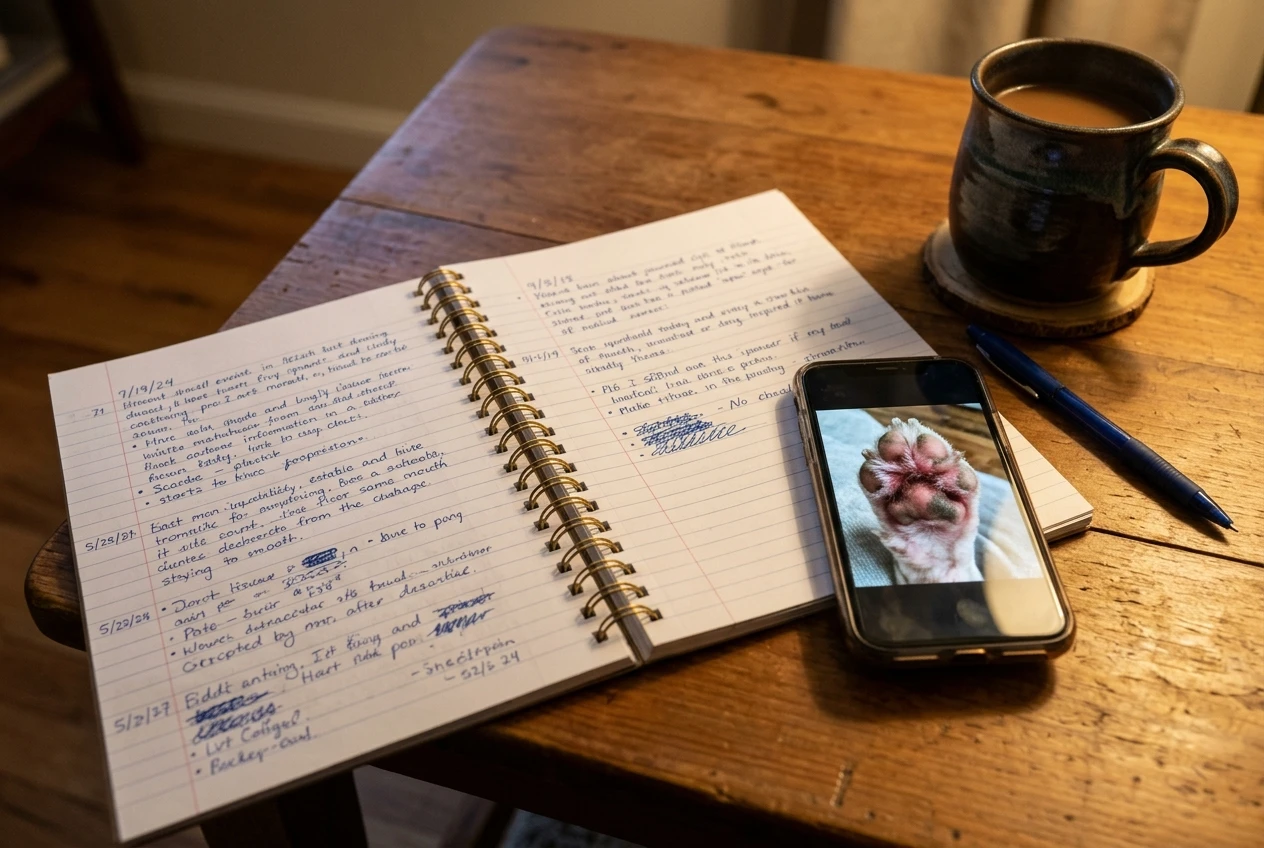
Record:
- Itch level. A simple 0 to 10 score each day, scored the same way each time, works better than long descriptions.
- Where the pet itches. Paws, ears, belly, base of the tail, face.
- Skin changes. Redness, scabs, hot spots, hair loss, odor. A dated photo every week or so is easier to compare than memory.
- Digestive signs. Stool quality, vomiting, gas, appetite.
- Food. Everything eaten, including treats and chews, with brands and flavors.
- Environment. Pollen forecast or weather, new cleaning products, bedding washes, time outdoors, new places visited.
- Flea control. What product, which date applied, and any fleas or flea dirt found.
- Medications and supplements. Names, doses and dates.
- Changes you made. One line per change, with the date.
Review the diary every week or two. Look for patterns, such as flare-ups after walks in a particular park, or a couple of bad days following a new chew. Patterns are suggestions rather than proof, but they help you decide what to change next and give your vet something concrete to examine.
Bring the diary, the photos and the list of every product your pet has used to the appointment.
When is it time to stop home management and call the vet?
Call the vet as soon as there is a sign of infection, pain or serious illness, and before you have spent weeks experimenting if the problem is not clearly improving. Home management supports veterinary care. It does not replace it.
Contact your vet promptly if you see:
- Open sores, bleeding, oozing or crusted skin, or a hot, painful patch
- A strong smell from the skin or ears, or an ear your pet will not let you touch
- Constant head shaking or scratching at the ears
- Vomiting or diarrhea that continues, contains blood, or comes with lethargy or weight loss
- A pet that is not eating or drinking normally
- Bald patches from over-grooming in a cat
- No improvement after a few weeks of sensible changes, or symptoms getting worse
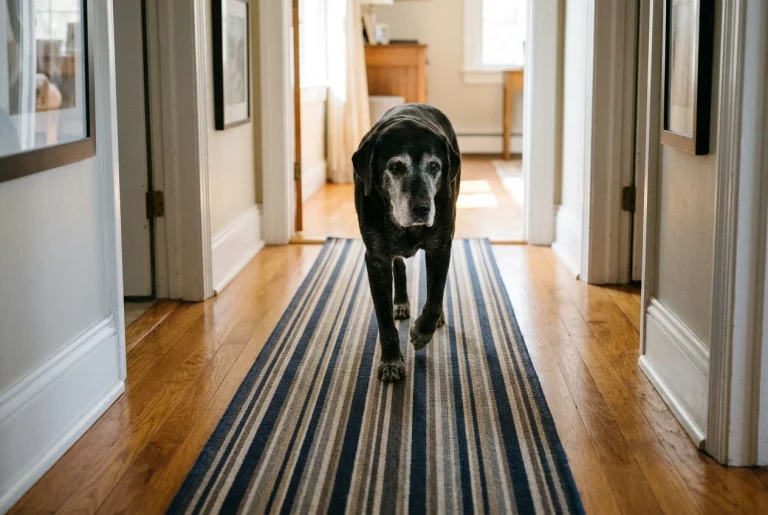
- A puppy, kitten, senior pet or a pet with another health condition showing any of the above
Treat facial swelling, hives, difficulty breathing, collapse or repeated severe vomiting as an emergency and go to a vet immediately.
Avoid giving human medications, including antihistamines and pain relievers, unless your vet tells you exactly what and how much. Doses and safe choices differ between species, and some human medicines are toxic to pets.
Your vet may suggest skin tests, blood tests, medication to control itching, or treatment for a secondary infection. These are decisions for the veterinary team, based on examining your pet. What you bring to that conversation is a clear history: what you tried, in what order, and what changed. That record is the most useful thing the work at home produces.