How to Make Your Home Easier for a Senior Dog or Cat to Move Around In
Senior pet comfort and mobility at home improves most with a few small changes: grip on slippery floors, a supportive bed that is easy to step into, bowls and litter trays that are easy to reach, and ramps or steps to favourite spots. Sudden changes, signs of pain or toilet accidents need a vet first, because they can have a medical cause.
How do I know my senior pet is struggling to get around?
The first signs are usually small changes in how your pet does ordinary things, and they are easy to put down to “just getting older.” Watching a few everyday movements over a week or two will show you more than any single moment.
Common signs include:
- Hesitating before stairs, the sofa or the car, or stopping to look at them first
- Slipping or splaying their legs on hard floors
- Taking longer to stand up after resting, or stiffness that eases after a few minutes of walking
- Sleeping in new places, often on cooler hard floors, or changing position more often
- A cat who no longer jumps onto the window sill, a counter or the bed
- Missing the litter tray, or perching on the edge instead of stepping in
- Shorter walks, or lagging behind on routes they used to enjoy
None of these proves a particular condition, and many have treatable causes. They do tell you where your home is asking too much of your pet, which is the useful thing to know before you change anything.
Which floors and stairs cause the most trouble, and how do I make them safer?
Smooth hard floors and open stairs cause the most trouble, because an older pet with weaker muscles cannot grip or brace the way it used to. Tile, laminate and polished wood give paws nothing to hold on to, so each step takes more effort and more fear.
For floors, work along the routes your pet uses most: bed to bowl, bowl to door, door to favourite resting spot. A few options help:
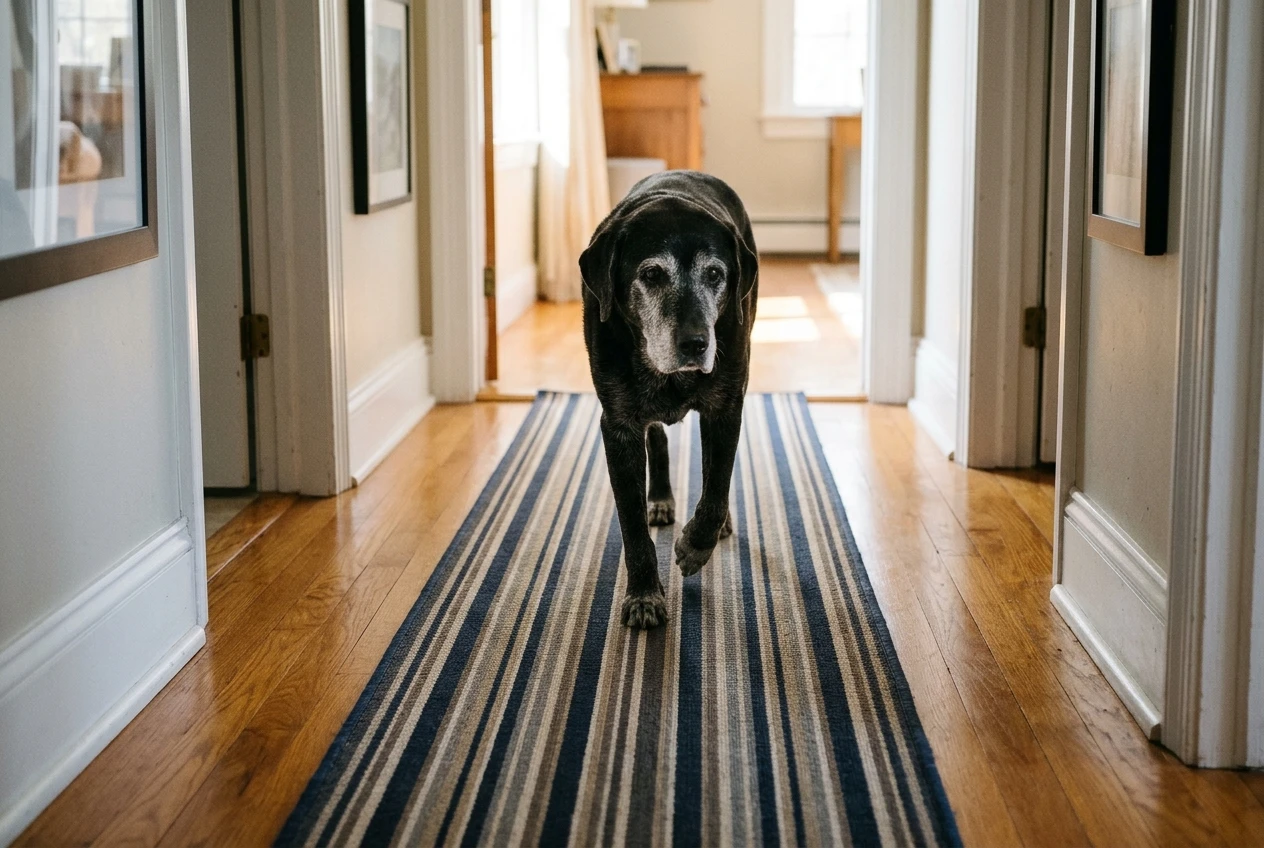
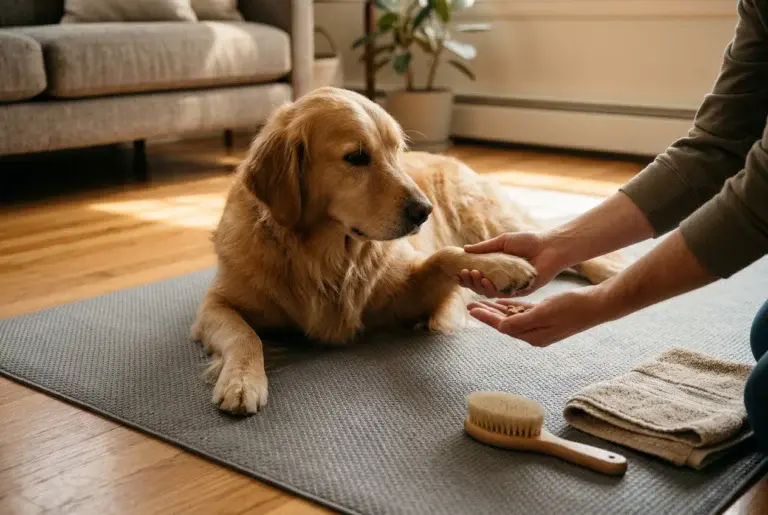
- Runners or washable rugs with a non-slip backing, laid so they overlap the gaps between rooms
- Interlocking foam or rubber mats in larger open areas
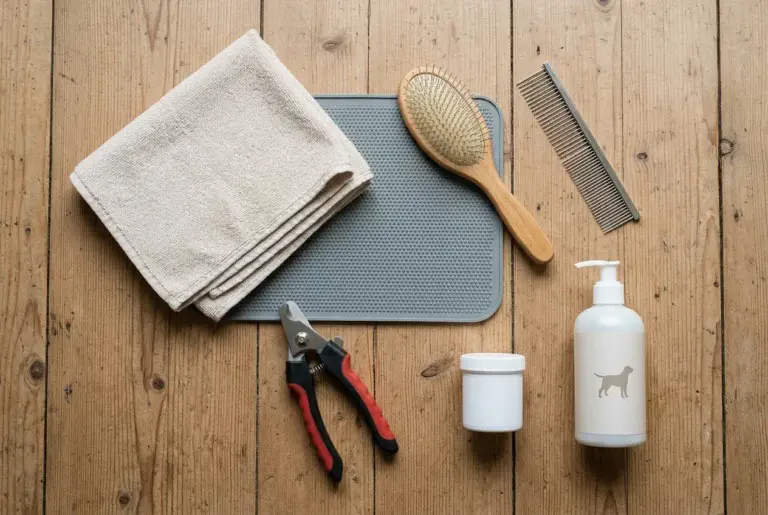
- Keeping nails trimmed, since long nails push paws out of position on hard surfaces
- Trimming the fur between paw pads if it is long, as it can reduce grip. Ask a groomer or vet to show you if you have not done it before. Our guide to pet grooming at home covers how to keep the session calm.
Make sure rugs cannot slide. A rug that moves under a stiff pet is worse than a bare floor, so use a grip underlay or tape the edges down.
For stairs, add carpet strips or stair treads with a grip surface, and make sure the lighting is good, because older pets often see less well in dim light. A baby gate at the top or bottom is a reasonable choice if your pet is unsteady on stairs and has no real need to use them. If the sleeping area is upstairs, consider moving a bed to the ground floor so they are not facing the stairs several times a day.
What kind of bed helps a senior pet rest more comfortably?
The best bed for a senior pet is supportive, easy to step into and placed somewhere warm and draught-free. Rest matters more as joints stiffen, and a thin, worn bed that has lost its shape does little to cushion hips and elbows.
Look for these features:
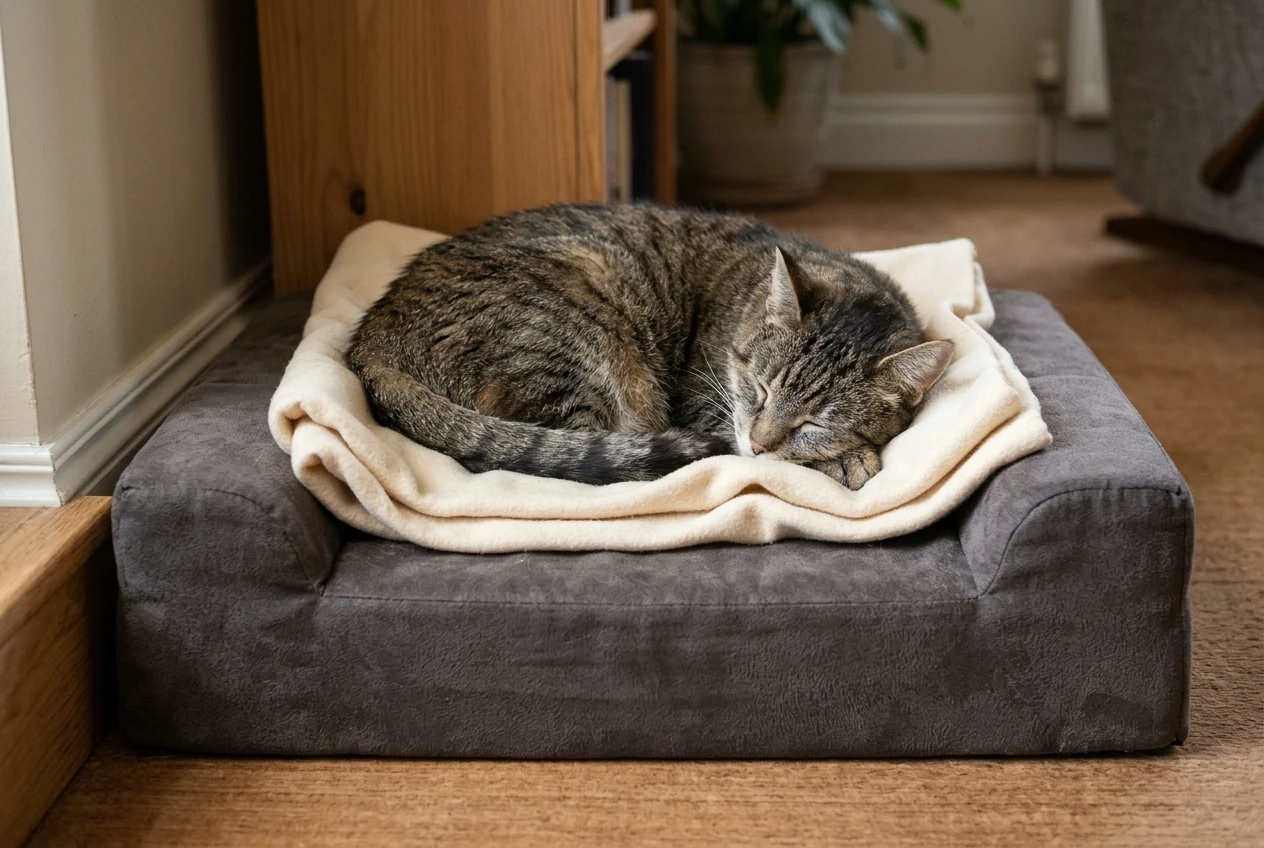
- Thick, supportive padding. Memory foam or orthopaedic foam spreads weight better than loose, thin filling. Press your hand in: if you feel the floor easily, it is too thin for a heavy dog.
- A low entry. A bed with a tall bolster can be a barrier. A flat edge or a cut-away front lets your pet walk in rather than climb.
- A washable cover. Older pets may have accidents or shed more, and a cover you can wash often keeps the bed pleasant to use.
- A non-slip base. A bed that skids when your pet steps on it can put them off using it.
Placement counts as much as the bed itself. Choose a spot away from draughts and not on a cold floor, with an easy route to water and the door. Cats often like a heated or insulated bed, but use only products made for pets, and follow the maker’s instructions. Many older cats also like a bed raised only a few centimetres off the floor, which gives them a feeling of safety without a big jump.
If your pet is not using a new bed, give it a few days and put a familiar blanket on top. Pets often stay loyal to the old bed until the new one smells like home.
How should I change feeding, water and litter set-ups for stiff joints?
Make every essential easy to reach without bending, stretching or climbing. Eating, drinking and using the toilet happen several times a day, so small strains in those routines add up.
Bowls. Put bowls on a non-slip mat so they do not slide as your pet eats. A slightly raised bowl can help a pet with a stiff neck or sore front legs, but ask your vet first if you have a large, deep-chested dog, as bowl height is a debated subject for some breeds. Place a second water bowl on each floor your pet spends time on, so they do not have to travel far when thirsty.
Cat food and water. Keep them at floor level or on a low, stable surface. Avoid high shelves or counters if your cat has stopped jumping.
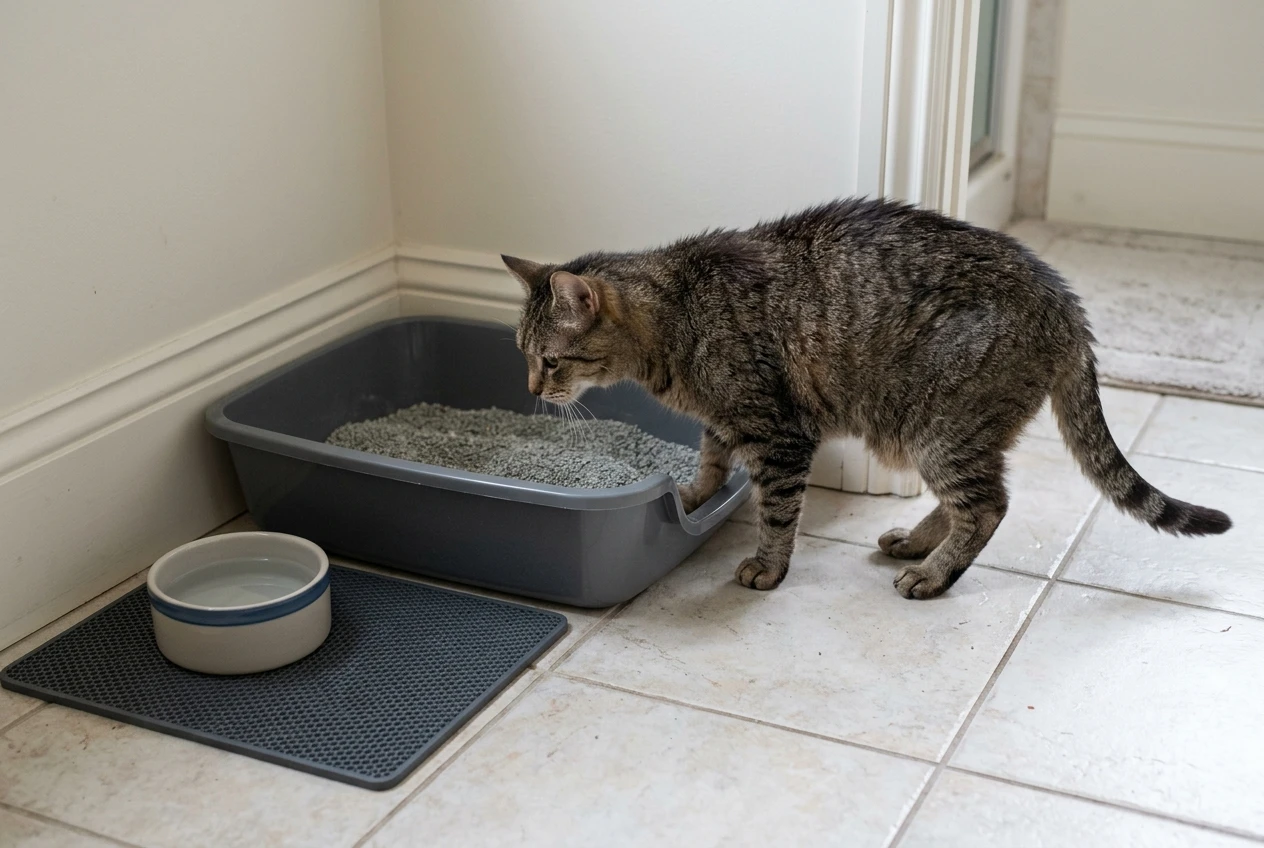
Litter trays. A tray with a high side can be difficult for a cat with sore hips or knees. Choose one with a low entry, or cut a low doorway into a large storage box if you prefer to make your own, sanding the edge smooth. Put a tray on each level of the house, and place it somewhere quiet and easy to get to. Use a soft, familiar litter, because some cats find rough or heavy litter uncomfortable under sore paws.
Dogs and toileting. If your dog struggles with steps to the garden, a small ramp or a mat on the steps can help. If accidents begin in the house, treat that as a prompt to talk to your vet rather than a training problem.
How can I help my senior pet reach the sofa, bed or car?
Ramps and steps let your pet keep going to the places they love without the strain of jumping. Jumping up and landing puts force through the joints, so a gentle slope or a few low steps is kinder than lifting or leaving them to try.
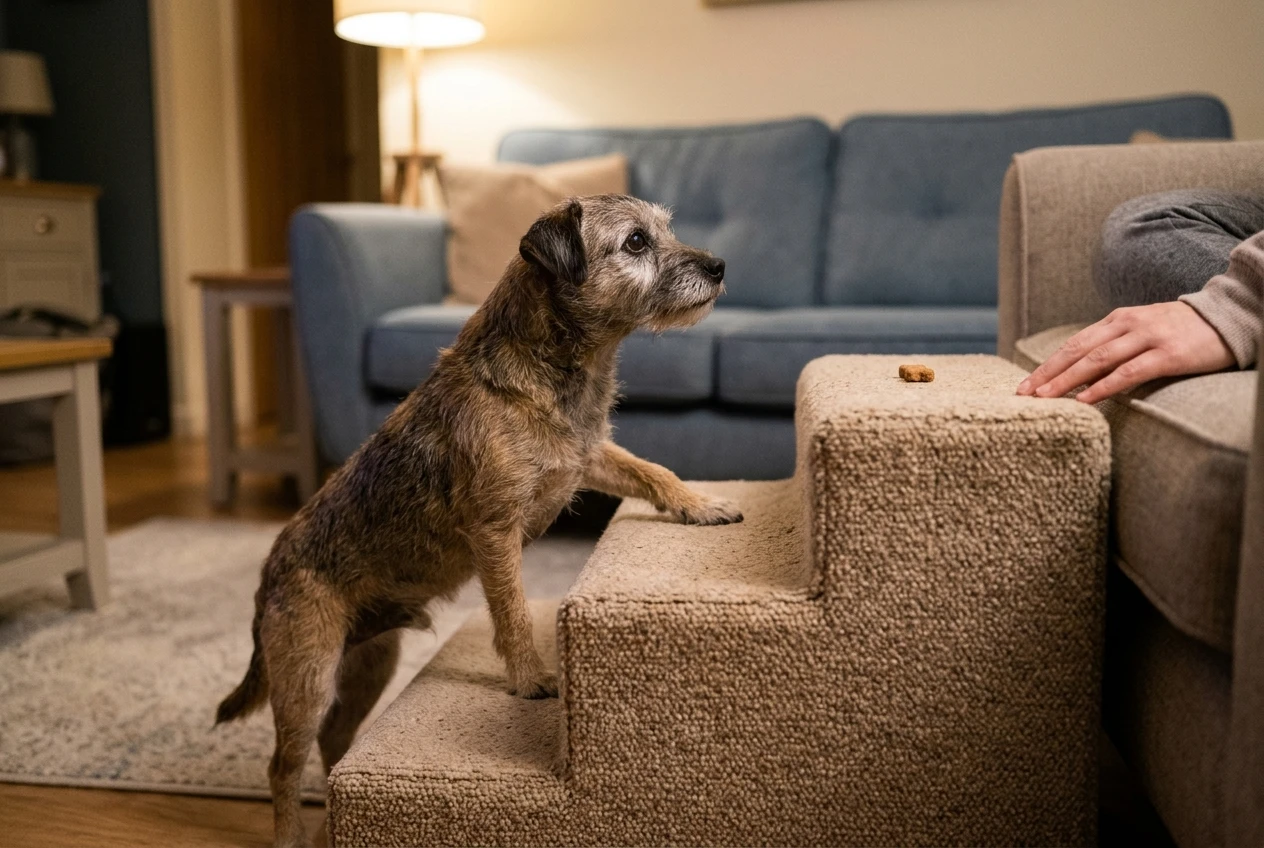
- Pet steps suit cats and small dogs reaching a sofa or bed. Choose ones with a wide, grippy surface and a sturdy base that does not wobble.
- Ramps suit dogs who find steps awkward, or heavier pets. A gentle slope with a textured surface is easier than a steep one.
- Training takes patience. Put a treat on the first step or the ramp, and let your pet approach at their own speed. Short, relaxed sessions work better than one long attempt.
- Lifting is a last resort. If you must lift, support the chest and hindquarters together, and ask your vet to show you a safe way for your pet’s size and condition.
For the car, a ramp to the boot or back seat saves your dog a high jump. Cats and small dogs travelling in a carrier or restraint should have a stable, padded space. Our guide to the best pet car seats covers how to keep your pet secure on the journey.
Which changes can I make this weekend, and which need a vet first?
Most changes to floors, bedding and bowls are safe to make straight away. Anything that points to pain, illness or a sudden shift in behaviour needs a vet before you adjust your home around it.
Make this weekend | Talk to a vet first |
|---|---|
Add grip mats or rugs with non-slip backing | A sudden loss of ability to jump, climb or stand |
Move the bed away from draughts and onto a ground floor | Crying out, yelping or flinching when touched or lifted |
Put bowls on a non-slip mat and add a second water bowl | Limping that lasts more than a day or two, or comes on suddenly |
Switch to a low-entry litter tray | Toilet accidents, straining or avoiding the litter tray |
Add pet steps next to the sofa or bed | Marked changes in appetite, thirst or weight |
Keep nails trimmed and lights on at night | Confusion, pacing at night or not recognising familiar people |
Home changes help your pet cope, but they do not treat the cause. Arthritis and other painful conditions often have options, from medication to physiotherapy, and your vet can tell you what suits your pet. Take notes or short phone videos of how your pet walks, climbs and gets up, since they can show things that disappear in the clinic.
How do I keep my senior pet’s mind and mood active as movement slows?
Keep your pet mentally engaged with gentle activities that need little physical effort. Boredom and low mood can follow reduced movement, and a pet who is mentally busy often seems brighter.
Ideas that suit slower pets:
- Sniff-based games. Scatter a few treats on a mat, or hide them around one room. Sniffing is tiring in a good way and requires no jumping.
- Puzzle feeders and lick mats. Pick simple ones at first so your pet does not get frustrated.
- Short, frequent walks. Several brief outings are often easier than one long one. Let your dog stop and sniff as much as they like.
- Window access for cats. A low perch by a window with a view of birds or the street offers entertainment without a high climb.
- Gentle play. A feather wand or soft toy moved slowly along the floor can interest a cat without asking for leaps.
- Company and routine. Time near you, a predictable day and a calm place to rest all matter to an older pet.
Watch your pet’s response. If they lose interest in things they used to love, withdraw or become irritable, mention it to your vet, as pain and other health problems can show up as a change in mood.
Older pets often keep their personality long after their bodies slow down, and a home set up around what they can still do gives them more good days.