How to Brush Your Dog’s or Cat’s Teeth at Home, and What to Do When Brushing Isn’t Working
Pet dental care at home works best as a short daily routine: brush with pet toothpaste on a soft brush or finger brush, and introduce it over about a week in small steps. If brushing fails, use chews, wipes or gels as backups. Red or bleeding gums, sudden bad breath or pain mean a vet needs to look.
Why does pet dental care at home matter?
Home care matters because plaque builds on your pet’s teeth every day, and brushing is the only home method that removes it well. Plaque left on the teeth hardens into tartar, which brushing cannot remove. Tartar irritates the gums, and gum disease can be painful for a dog or cat long before it looks bad from the outside.
Pets rarely show mouth pain clearly. Many keep eating, so an owner can miss a problem that has been developing for months. A routine that has you handling the mouth regularly means you notice changes early.
Home care has limits. It reduces how quickly build-up forms and how often problems arise, but it does not replace a vet’s exam. A vet can check below the gumline, where much dental disease starts and where you cannot see. Professional cleanings and dental X-rays are done under anaesthesia, and your vet can tell you how often your pet needs a dental check.
What do you need before you start brushing?
You need a small set of supplies, and the most important one is a toothpaste made for pets. Gather everything before the first session so you are not searching for items while holding a squirming animal.
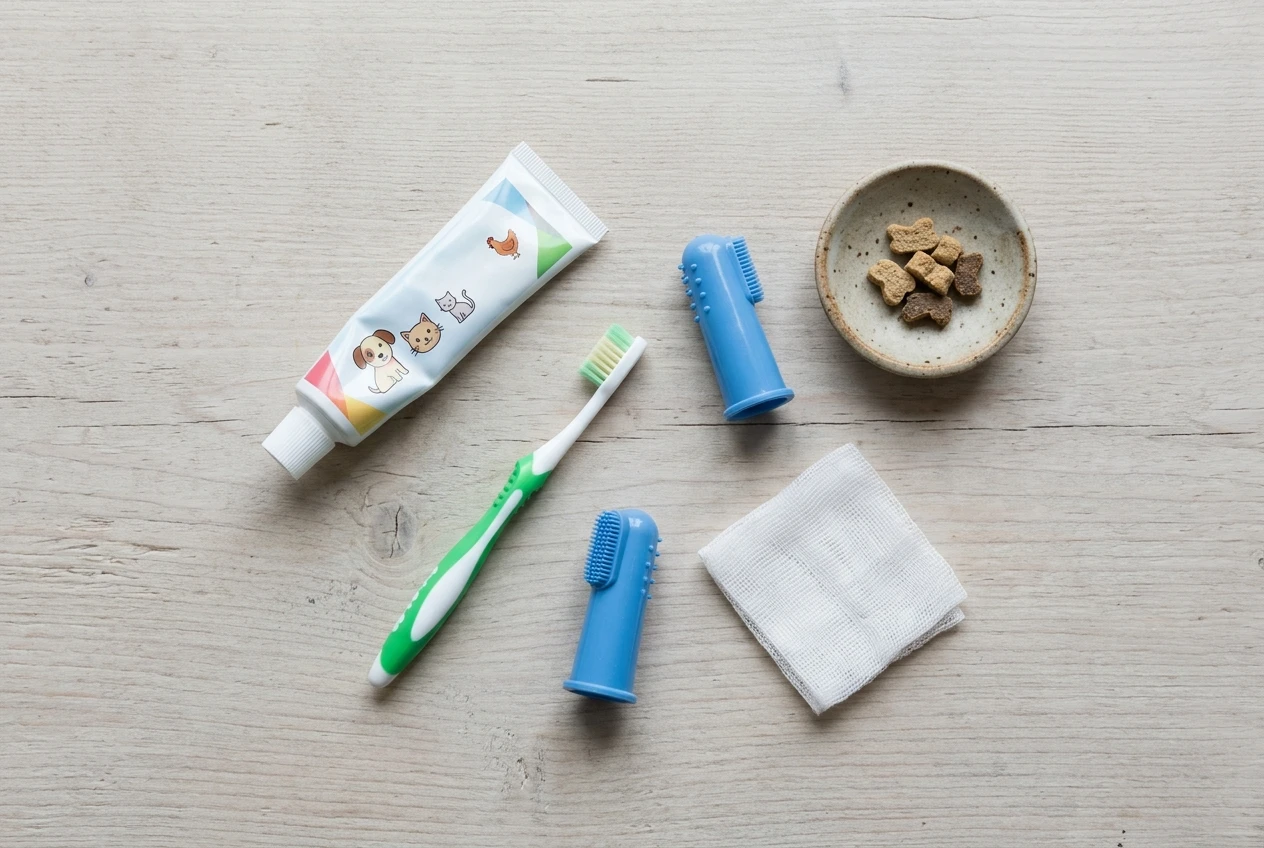
- Pet toothpaste. Choose a poultry, malt or similar flavour your pet likes. Pets cannot spit, so the paste is swallowed, and it must be safe for that.
- A brush or finger brush. A soft-bristled brush with a small head suits cats and small dogs. A rubber finger brush gives a beginner more control and feels less foreign to the pet.
- Gauze or a soft cloth. Useful for the early stages, before a brush goes anywhere near the mouth.
- Small treats or a favourite meal. The routine should end with something your pet enjoys.
- A non-slip spot and good light. A towel on your lap or a bath mat on the floor keeps a small pet steady.
Do not use human toothpaste. It is not meant to be swallowed, and some products contain xylitol, a sweetener that is toxic to dogs. Check the label of anything you put in your pet’s mouth.
How do you get a dog or cat used to having their teeth brushed?
Introduce brushing in small stages over about a week, and move to the next stage only when your pet is relaxed at the current one. The aim at first is not clean teeth but a pet that accepts having their mouth touched.
This is a rough schedule. If your pet pulls away or tenses up, go back a stage and stay there longer.
- Days 1 and 2: the taste. Put a little pet toothpaste on your finger and let your pet lick it. Do this once or twice a day. Stop while they are still interested.
- Days 3 and 4: the touch. Let them lick the paste, then gently rub a finger along the outside of their upper gums for a few seconds. Reward straight away.
- Days 5 and 6: the cloth or finger brush. Wrap gauze around your finger or use the finger brush with paste, and wipe a few teeth on one side. Keep each session under a minute.
- Day 7 onward: the brush. Move to the toothbrush with paste, touching just a few teeth. Add a little more each day.
Pick a time when your pet is calm, such as after a walk or after a meal has settled. Keep your own voice and movements slow and relaxed. Always finish on something positive, even if you only got through two teeth.
How do you brush a pet’s teeth step by step?
Brush the outer surfaces of the teeth with small circular motions along the gumline, using a little paste and a calm, firm hold. Once your pet accepts the brush, this is the full routine.

- Settle your pet somewhere steady. Small dogs and cats can sit on your lap or on a counter with a towel. A larger dog can sit or lie beside you.
- Put a pea-sized amount of paste on the brush and let your pet taste it.
- Lift the lip on one side with your free hand. You do not need to open the mouth wide, because you are brushing the outside of the teeth.
- Angle the bristles toward the gumline, about 45 degrees, and brush in small circles.
- Start with the upper back teeth and the canines. The cheek side of the upper teeth is where tartar often builds, so give it the most attention.
- Work along one side, then the other. Start with about 30 seconds per side and extend the time gradually as your pet tolerates it.
- Finish with praise and a treat or meal. Do not rinse; the paste is meant to be swallowed.
You do not need to scrub the inside surfaces of the teeth. The tongue and the way your pet moves their mouth clean those surfaces better, so concentrate on the outside. Use light pressure. Hard scrubbing can make the gums sore and turn your pet against the whole routine.
If your pet’s gums bleed lightly in the first week or two, note it and watch whether it stops as the gums get used to brushing. Bleeding that continues, or gums that look red and swollen, is a reason to book a vet visit rather than keep brushing through it.
What can you do if your pet won’t let you brush?
If your pet will not tolerate brushing, go back one stage in the introduction schedule, try a different flavour and shorten each session. Many pets accept brushing once it is slower and more rewarding. Some never do, and for those there are second-best options.
Consider whether the mouth hurts. A pet that was fine with handling and suddenly resists may be in pain, and pushing on will make it worse. Have a vet look before you try again.
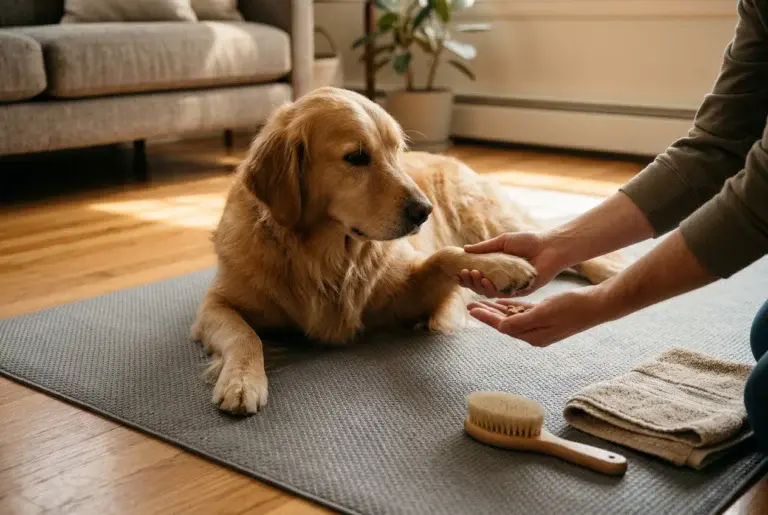
Getting your pet used to being handled overall also helps. Our guide to pet grooming at home covers how to make handling calmer, and the same approach works for the mouth.
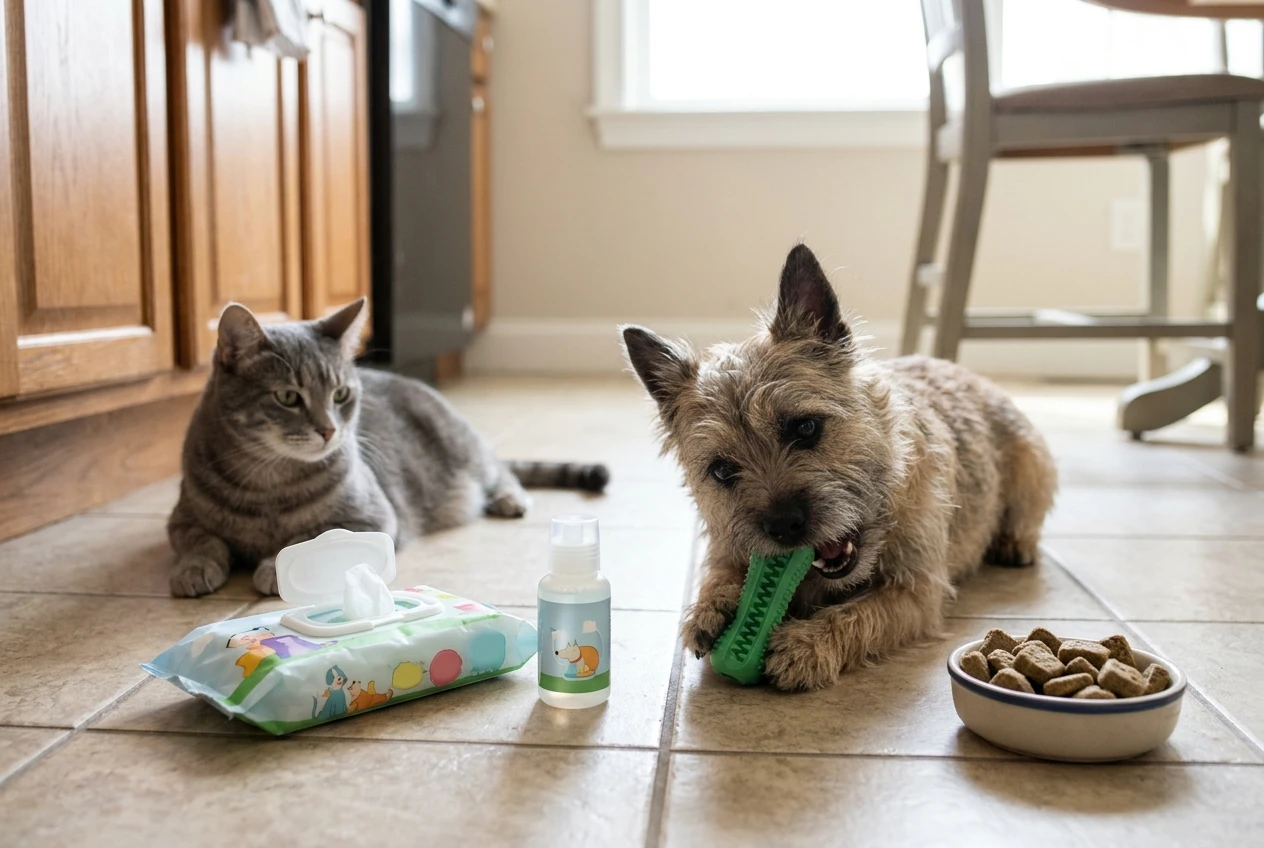
When brushing really is not working, these alternatives reduce plaque to different degrees:
Option | How it helps | Limits |
|---|---|---|
Dental chews and toys | Chewing scrapes some plaque off the teeth | Works mainly on teeth the pet chews with; extra calories to count |
Dental diets | Kibble shaped or formulated to reduce build-up | Needs to suit your pet’s overall nutrition; ask your vet |
Water additives | Added to drinking water to help reduce plaque | Less effective than brushing; some pets refuse the taste |
Dental wipes or gauze | Wipes the outer tooth surface without a brush | Less thorough than a brush, but easier to start with |
Oral gels | Applied to the gums and teeth | Weaker physical cleaning than brushing |
For chews and diets, look for the Veterinary Oral Health Council (VOHC) seal on the packaging. It shows the product has been assessed for reducing plaque or tartar. Products without it may still be fine, but the claim has not been checked in the same way.
Be careful with hard chews. Bones, antlers and very hard nylon toys can fracture teeth. A common guideline is that if you cannot press a thumbnail into the surface of a chew, it is probably too hard for your dog’s teeth.
None of these options matches daily brushing, but a partial routine still does more than nothing. Combine one or two of them with regular vet dental checks.
How do you check your pet’s mouth for problems?
Check your pet’s mouth once a week by lifting the lips and looking at the gums, the teeth and the area around the mouth. It takes less than a minute, and doing it at the same time each week makes changes easier to spot.
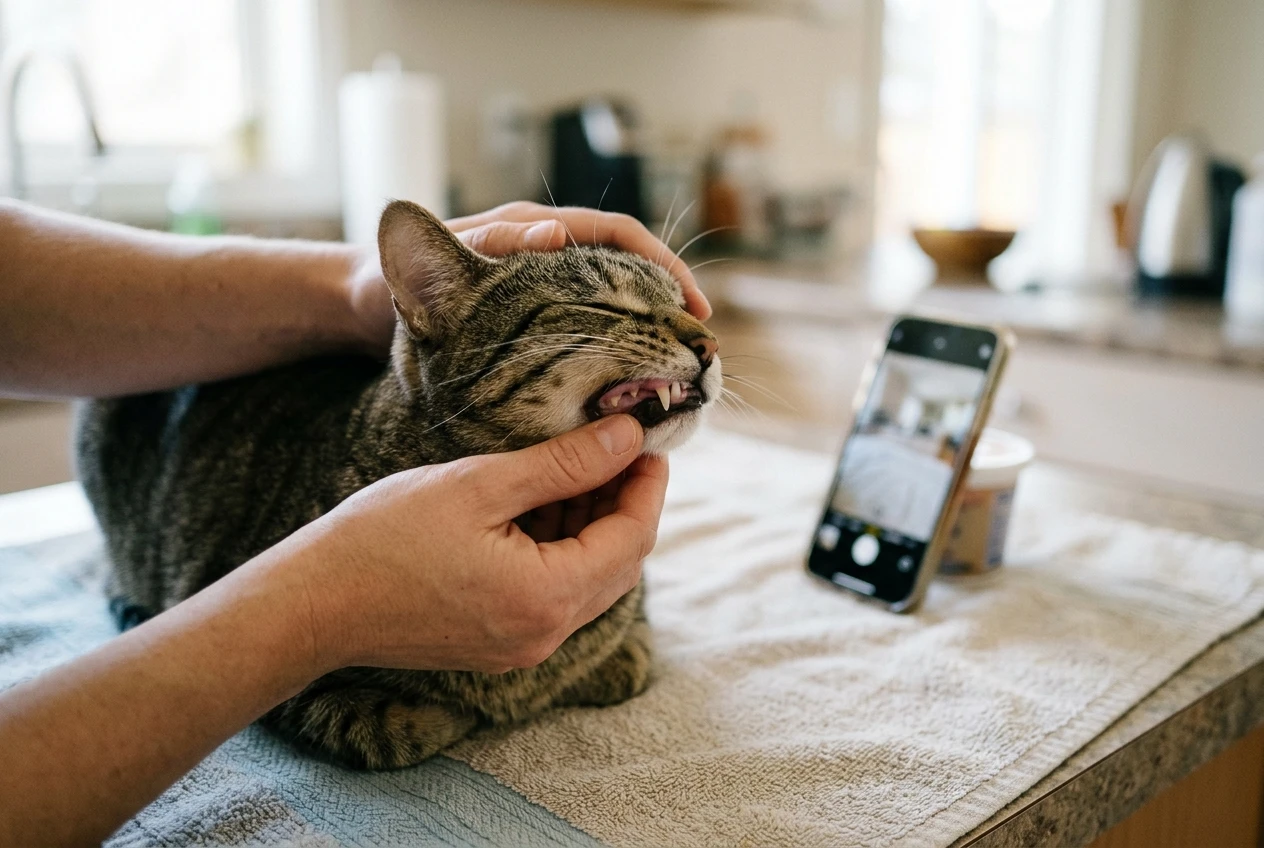
Look at these things:
- Gum colour. Healthy gums are usually pink, though some pets have naturally dark pigmented gums. Learn what is normal for yours. Redness, swelling or a bright red line along the gumline stands out against that baseline.
- Tartar. Yellow or brown deposits, especially on the back upper teeth near the gumline.
- Teeth. Chips, cracks, discolouration or any tooth that looks out of place.
- Smell. Mild doggy or cat breath is normal. A strong or changed smell is not.
- The face. Swelling under the eye or along the jaw, or any lump in the mouth.
- Behaviour. Dropping food, chewing on one side, pawing at the mouth or pulling away when you touch the face.
Take a photo each time if it helps. Comparing pictures over several weeks shows slow changes that are easy to miss day to day.
Which signs mean it is time to see a vet?
See a vet if you notice any sign of pain, bleeding, swelling or a loose or broken tooth, because these cannot be fixed with brushing or chews. Home care is for maintenance, and these signs point to something already wrong.
Book a vet visit for:
- Bad breath that is strong, has changed, or has a rotten or unusual smell
- Red, swollen or bleeding gums that do not settle within a week or two of gentle brushing
- Loose, broken, chipped or discoloured teeth
- Heavy tartar that covers much of the tooth surface
- Drooling more than usual, or drool that is bloody
- Dropping food, chewing on one side, or going off hard food
- Pawing at the mouth or rubbing the face on furniture
- Swelling on the face or under the eye
- A lump, sore or growth anywhere in the mouth
- A pet that becomes head-shy or snaps when you touch the face
Cats in particular can hide mouth pain. A cat that eats more slowly, chews oddly or stops grooming may have a dental problem even if the teeth look fine from outside. Do not wait for obvious signs.
If you are not sure whether something is serious, a phone call to your vet’s clinic is a reasonable first step. Describing what you see often helps them decide how soon your pet should come in.
How often should you do each part of the routine?
Brush daily if you can, because plaque returns every day, and aim for at least a few times a week if daily is not realistic. The other parts of the routine need less frequent attention.
Task | How often |
|---|---|
Brushing with pet toothpaste | Daily is ideal; several times a week at minimum |
Dental chews, if used | As directed on the packaging, within your pet’s calorie allowance |
Water additive, if used | Daily, in fresh water |
Mouth check at home | Weekly |
Vet dental check | As often as your vet recommends, usually at routine exams |
Vet visit for warning signs | As soon as you notice them |
Tie brushing to something you already do each day, such as the evening feed or your own bedtime routine. A habit attached to an existing one is easier to keep than a separate task.
If you miss a few days, restart without fuss. If you have missed a longer stretch and your pet has become wary, go back through the first stages of the introduction schedule. A consistent routine that fits your life will do more for your pet’s teeth than an ideal one you drop after a fortnight.