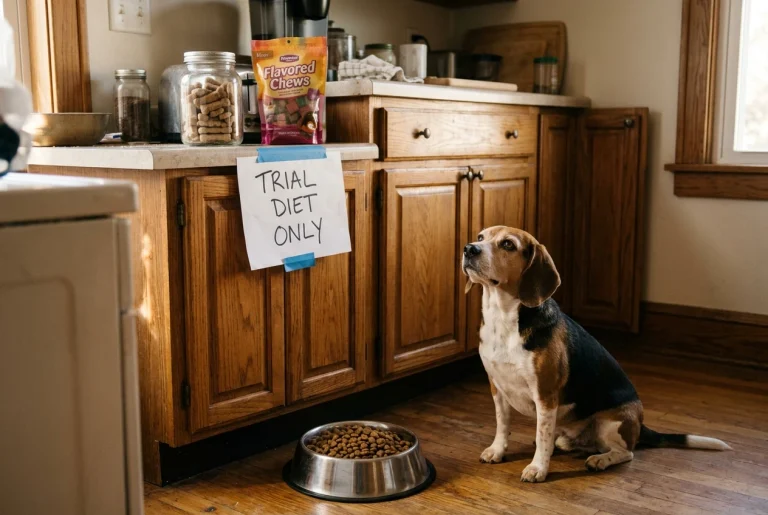
How to Transition Your Dog or Cat to a New Food Without Upsetting Their Stomach
To transition your pet to a new diet, mix a little of the new food into the old food and raise the share of the new food every few days until it replaces the old one completely. Most dogs need about a week to ten days, and cats often do better with longer. Slow down if stools soften.
This guide starts after you have picked the food. If you are still deciding, the piece on choosing a healthy dog diet that fits your budget covers that stage. Everything below is about the changeover: the schedule, what to do when a pet refuses the bowl, and when to call the vet.
How do you switch your pet to a new food safely?
You switch safely by changing the food gradually, so the gut bacteria and digestive enzymes have time to adjust to the new ingredients. A sudden swap is the most common cause of vomiting and diarrhea after a food change, even when the new food is a good one.
The method is the same for dogs and cats:
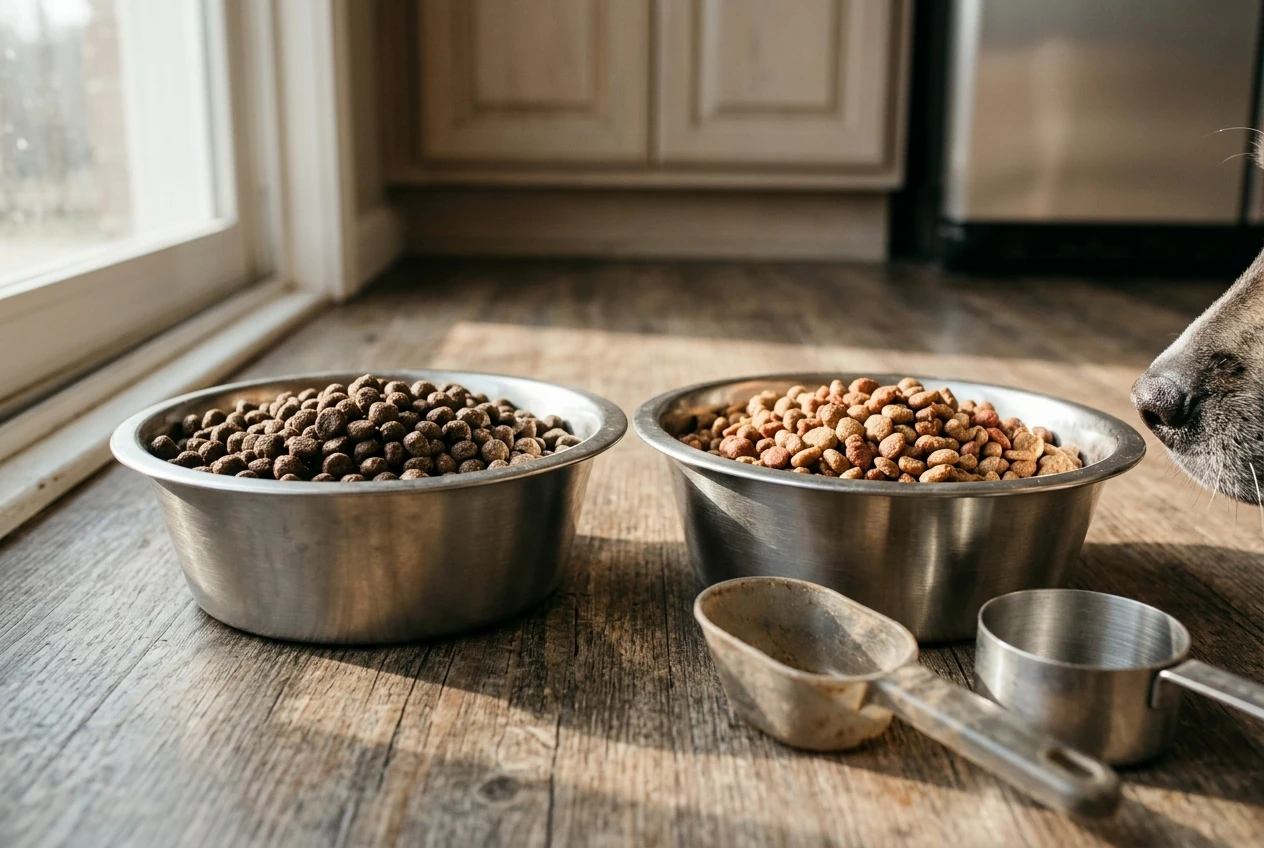
- Keep feeding the same total amount your pet eats now.
- Replace a small portion of the old food with the new food.
- Increase the new portion on a set schedule, as long as stools stay normal and appetite holds.
- Pause the schedule at any step where your pet’s digestion looks off.
Keep everything else steady while you do this. Feed at the same times, avoid adding new treats, and hold off on other changes such as a new supplement or chew. If something upsets your pet’s stomach, you want only one possible cause.
How long should a diet transition take?
A typical transition takes seven to ten days for a healthy adult dog and ten to fourteen days or more for a cat. These are starting points rather than fixed rules, because the right pace depends on how sensitive your pet’s stomach is and how different the two foods are.
Plan for a longer switch in these situations:
- The new food is a different type, such as dry to wet, or kibble to a fresh or raw diet.
- The protein source changes completely, for example chicken to fish.
- Your pet has a history of loose stools, vomiting or a sensitive stomach.
- Your pet is a fussy eater who notices small changes.
A faster switch is only appropriate when your vet says so. Some medical diets are started on a different schedule, so follow their instructions over any general plan.
What does a day-by-day food switch look like?
A standard dog schedule moves from 25 percent new food to 100 percent over about a week. Measure each portion rather than estimating, so the total daily amount stays constant.
Days | Old food | New food |
|---|---|---|
1 to 2 | 75% | 25% |
3 to 4 | 50% | 50% |
5 to 6 | 25% | 75% |
7 onward | 0% | 100% |
For a cat, or a dog with a sensitive stomach, stretch the same steps out. You might start with 10 percent new food and spend three to four days at each stage, so the full switch takes two weeks or more. A longer schedule costs you nothing except patience.
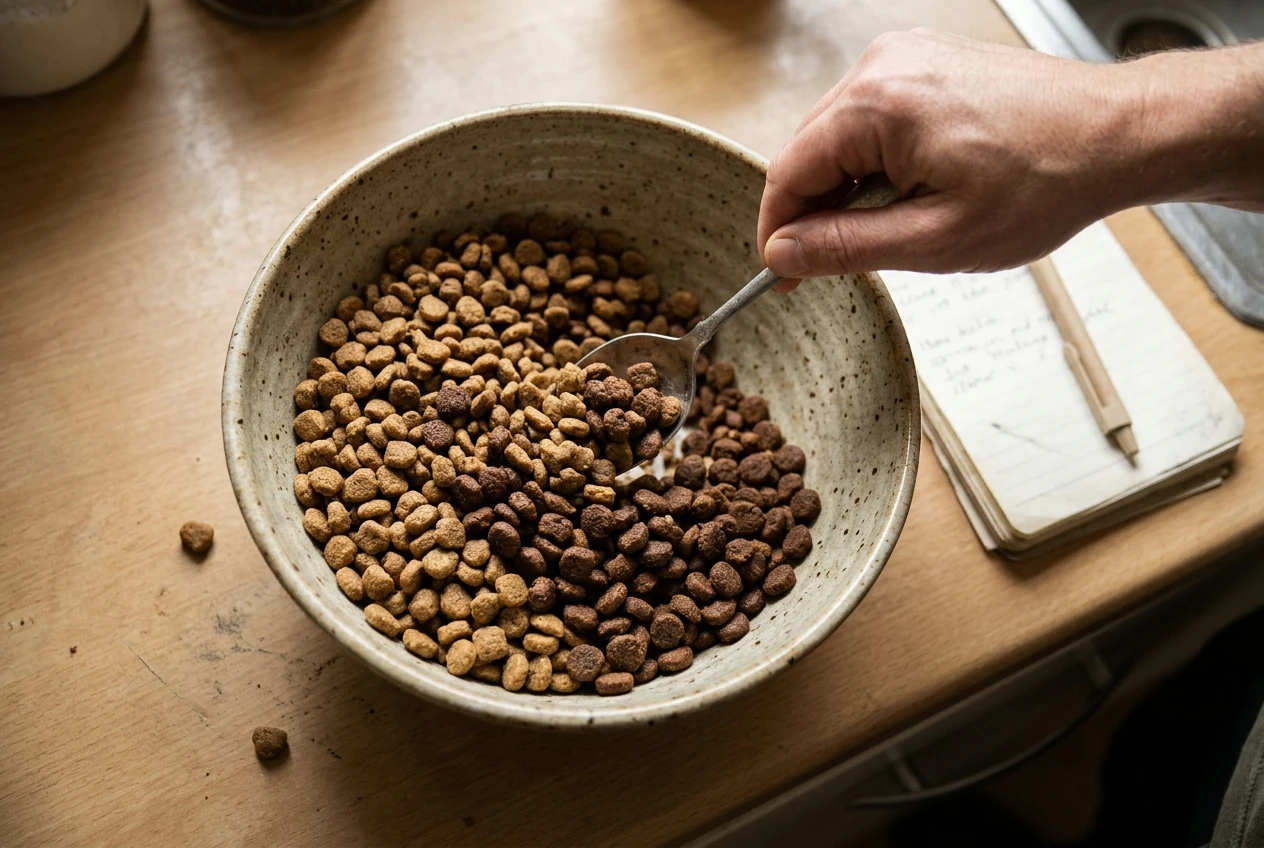
Mixing tips that help
- Stir the foods together thoroughly. Pets that pick out the old food and leave the new one are not transitioning.
- Mix wet and dry foods in the same bowl only if your pet already eats both. Otherwise, keep the types separate and shift the proportions meal by meal.
- Split the daily amount into two or more meals. Smaller meals are easier on a stomach that is adjusting.
- Check the feeding guide on the new food’s label. Foods differ in calorie density, so the right amount of the new food may not match what you have been pouring.
Write down what you fed and what came out each day. A short note about stool quality and appetite makes it obvious when a step went wrong and which one to return to.
How do you switch a picky cat or a dog who refuses the new food?
For a pet that refuses the new food, go back to a ratio they accept and move forward more slowly. Refusal usually means the step was too big, not that the food is wrong.
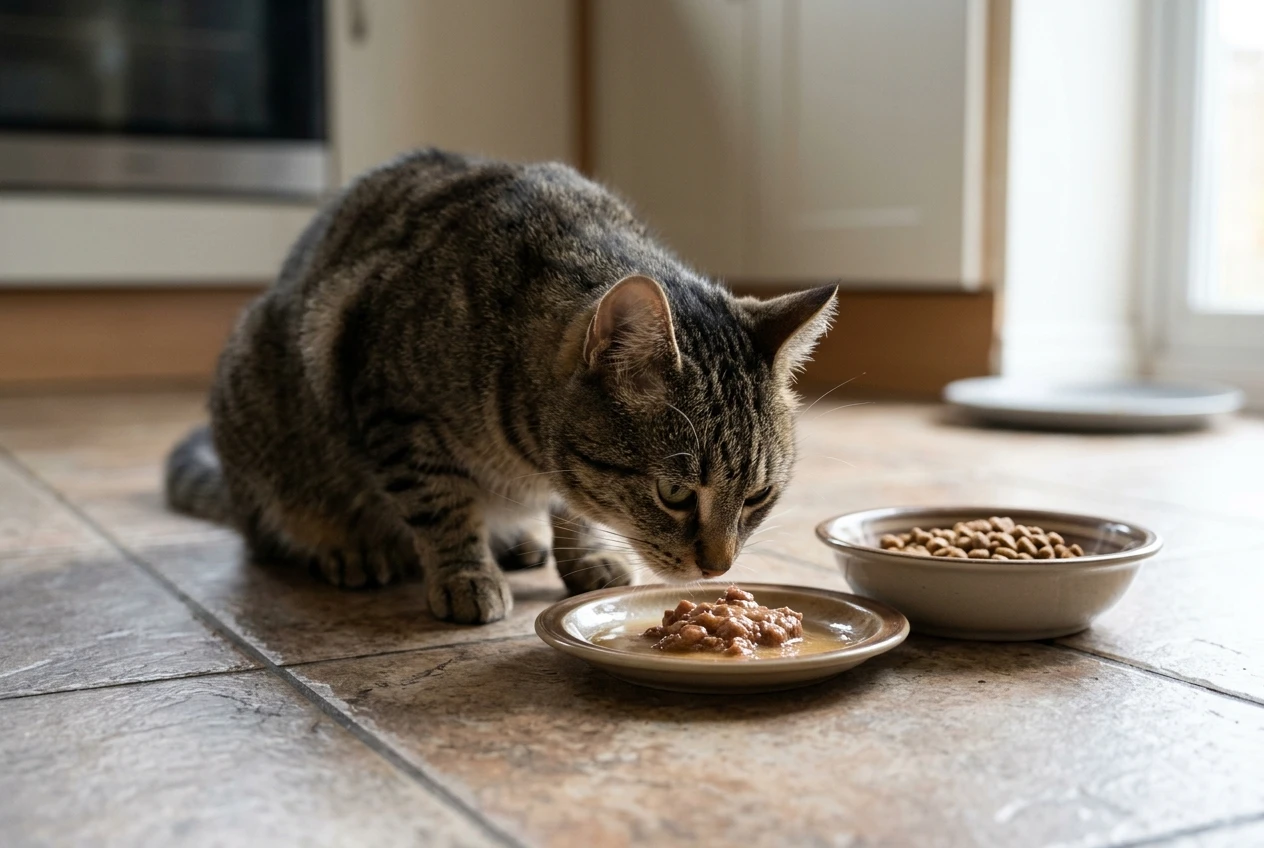
Try these in order:
- Shrink the portion of new food. Drop to 5 or 10 percent and stay there for several days. Many cats accept a small amount mixed in and then tolerate more.
- Warm wet food slightly. A few seconds in the microwave, stirred well and checked for hot spots, makes the smell stronger and more appealing. Serve it lukewarm, never hot.
- Offer the new food separately. Put a small dish of the new food beside the regular bowl. Some cats need to investigate it on their own terms.
- Add a topper your pet already likes. A spoonful of plain water, or a bit of a food they already eat, can help a first taste go down. Keep it small so it does not add many extra calories.
- Use a consistent schedule. Leave the bowl down for a set time, usually twenty to thirty minutes, then pick it up. Constant grazing weakens interest in a food that is new.
Do not make a cat go hungry until she gives in. Cats that stop eating can develop serious liver problems, and a cat that eats little or nothing for more than a day needs a call to the vet. Healthy dogs are more tolerant of a skipped meal, but a dog that refuses food for more than a day or two should also be checked, especially if he seems unwell.
If a pet refuses the new food entirely after several slow attempts, the food may not suit them. Ask your vet whether a different flavor, texture or brand makes more sense before you keep pushing.
What signs mean you should slow down or stop?
Mild changes in stool can happen during a transition, and they are a signal to slow down. More serious symptoms mean you should stop the new food and contact your vet.
Slow down and hold at the current ratio if you see:
- Softer stools than usual, or mild gas
- Slightly reduced interest in meals
- A single episode of loose stool
Stay at the current step for two or three days, or return to the previous ratio, until stools firm up. Then continue in smaller steps.
Stop the new food and call your vet if you see:
- Repeated vomiting
- Watery diarrhea that lasts more than a day or two, or any diarrhea with blood
- Lethargy, hiding, or a pet who seems painful or bloated
- Refusal to eat for more than a day (sooner for cats, kittens and puppies)
- Signs of an allergic reaction, such as facial swelling, hives or intense itching
Puppies, kittens, seniors and pets with existing conditions can get dehydrated quickly from diarrhea, so they need attention earlier. If your pet has itching or skin trouble that may be linked to food, the guide to managing pet allergies at home explains what to track while you work with your vet.
When should you talk to your vet before changing food?
Talk to your vet before changing food if your pet has a medical condition, takes medication, or is very young or very old. In these cases the choice of food and the speed of the switch can both matter for their health.
Check with your vet first when your pet:
- Has kidney disease, diabetes, pancreatitis, urinary problems, food allergies or a chronic digestive condition
- Is on a prescription or therapeutic diet
- Is a puppy or kitten, since growth diets have specific nutrient needs
- Is pregnant or nursing
- Is underweight, overweight or has lost weight recently without a clear reason
- Has had vomiting or diarrhea in the last few days
Your vet can also tell you whether a gradual switch is appropriate. For example, a cat with a urinary condition may need a specific food quickly, with close monitoring. Bring the food’s name and the ingredient list to the appointment so the advice fits the exact product.
What mistakes make a diet transition go wrong?
Most failed transitions come from a few predictable errors, and all of them are avoidable.
- Switching all at once. Even a food that suits your pet perfectly can cause diarrhea if it replaces the old food overnight.
- Moving too fast after a good day or two. Digestion can lag behind. Soft stools often show up on day four or five, not day one.
- Adding treats and extras during the switch. New chews, table scraps or toppers muddy the picture. If your pet gets sick, you will not know which change caused it.
- Not measuring. Estimating portions leads to overfeeding or underfeeding, and a calorie-dense new food can cause weight gain quickly.
- Switching during a stressful week. Travel, boarding, a move or visitors already strain a pet’s digestion. Postpone the change if you can.
- Treating refusal as stubbornness. A pet who turns away from the bowl is telling you the step was too big or the food is unsuitable.
- Giving up the old food too soon. Keep a small supply of the old food until the switch is complete, in case you need to step back.
How do you know the new food is working?
You know the food is working when your pet eats it willingly, produces firm and regular stools, and keeps steady energy and weight. Judge this after the transition is finished, not during it, and give it a few weeks.
Look for these signs over the first month:
- Stools: Firm, consistent, and in a similar amount and frequency each day.
- Appetite: Your pet eats meals with normal interest and does not leave food behind.
- Energy and behavior: Activity and mood stay at their usual level.
- Coat and skin: The coat looks clean and not dull, and there is no new scratching, flaking or ear trouble.
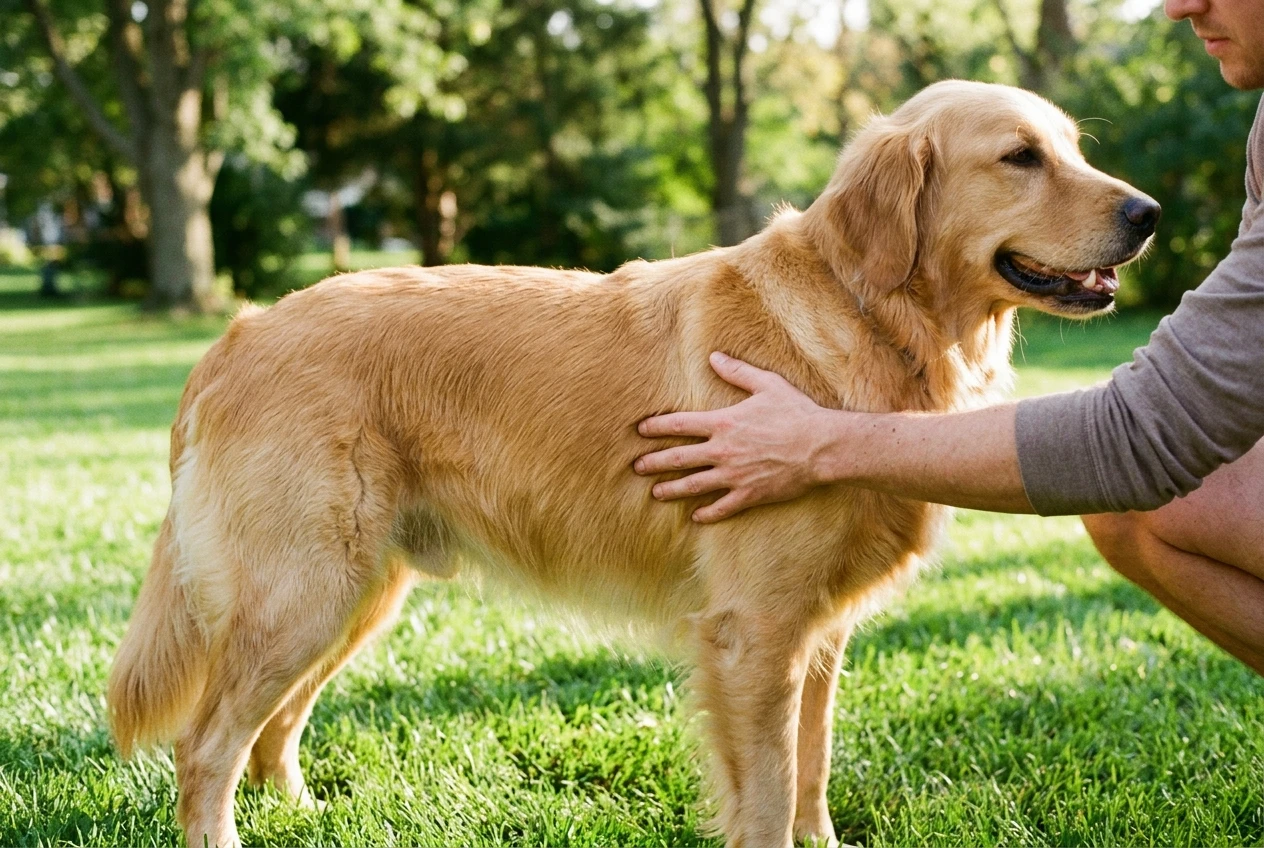
- Weight and body condition: Your pet holds a healthy shape. Run your hands along the ribs; you should feel them under a thin layer of fat. If you cannot, reduce the portion or ask your vet for a target.
- Vomiting and gas: Both should be rare. Frequent vomiting or heavy gas that continues after the switch suggests the food is a poor match.
Coat and skin changes can take several weeks to show, so do not expect quick visual results. If stools are normal and your pet seems well, the food is doing its basic job. If something is still off after the full transition, bring your notes to the vet, since they show exactly when each change appeared.